
Steel grating, as a high-performance structural material, is used across an extremely wide range of applications, spanning from heavy industrial platforms to refined architectural features. To meet such diverse demands, steel grating is manufactured in various specifications, primarily differentiated by the dimensions and spacing of the bearing bars, the spacing of the cross rods, and the material type. Understanding these specification parameters is critical, as they directly determine the grating's load-bearing capacity, span capability, self-weight, and cost-effectiveness.
Selecting the correct specification is the key to ensuring structural safety and operational efficiency. Different engineering projects require tailored solutions, which highlights the value of the diverse specifications available for steel gratings. Professional manufacturers can accurately calculate the required bar dimensions and spacing based on project blueprints, ensuring the final product adheres to all loading and safety standards.
High Load Applications: Heavy Duty Grating Specification
In many industrial and infrastructure projects, materials must meet exceptionally high load-bearing requirements. Areas such as vehicular access ways, port docks, aircraft aprons, and heavy machinery operation zones demand grating capable of sustaining massive concentrated loads and frequent impact.
1. Defining Heavy Duty Grating Specification
A heavy duty grating specification typically refers to steel grating manufactured using bearing bars with a thickness greater than 5mm (approximately $3/16$ inches) and a substantial height (such as 60x6mm, 80x8mm, 100x10mm, etc.). Furthermore, to enhance stiffness and uniform load distribution, the center-to-center spacing of the bearing bars (often denoted as S) may be reduced compared to standard specifications, for example, adjusted from 30mm to 25mm.
The characteristics of this specification include:
High Load Capacity: Capable of safely withstanding the passage of heavy forklifts, trucks, or even rail vehicles.
Large Span Capability: Maintains minimal deflection even over substantial support spans.
High Impact Resistance: The thick bearing bar structure effectively resists deformation from dropped heavy objects or impact loads.
2. Applications:
This specification of steel gratings forms the backbone of heavy industrial environments, being widely used in power plants, refineries, heavy-duty warehousing loading bays, and trench covers on main municipal roadways.
Standard Access and General Steel Walkway Mesh Specifications
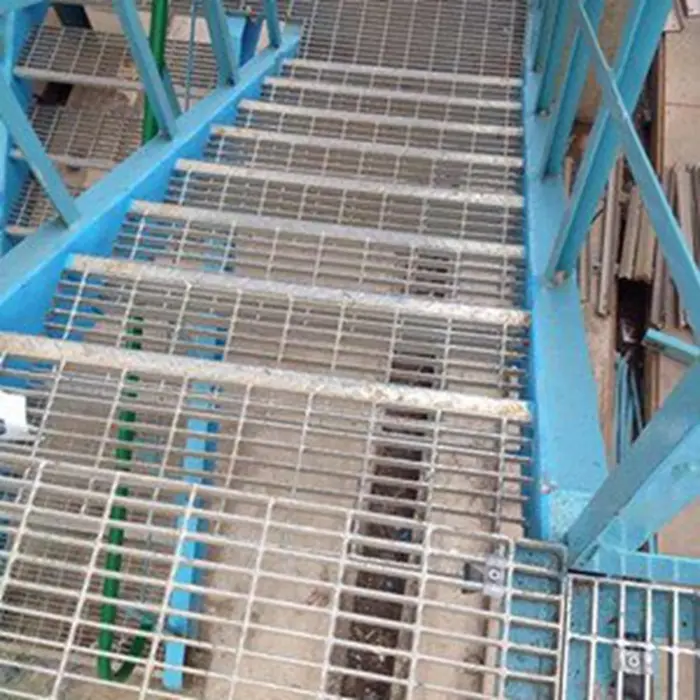
For most pedestrian walkways, platforms, and staircases in industrial and commercial buildings, the most common specifications are general-purpose steel gratings, often referred to as steel walkway mesh. These specifications are designed to strike the optimal balance between load capacity, ventilation/light penetration, and cost-efficiency.
1. Standard Walkway Parameters:
Standard steel walkway mesh typically employs bearing bars with a height ranging from 25mm to 40mm and a thickness of 3mm or 5mm. The most common standard spacing combinations include:
Bearing Bar Spacing: 30mm or 40mm.
Cross Rod Spacing: 50mm or 100mm.
For example, the designation 305/100 (30mm bearing bar spacing, 50mm cross rod spacing, 5mm bearing bar thickness) is extremely common for industrial walkways. This open configuration maximizes light and airflow while providing ample capacity for general foot traffic and maintenance loads.
2. Enhancing Safety: Safety Grating Features
While all grating types offer inherent ventilation benefits, the integration of safety grating features is crucial for personnel protection. These features include:
Serrated Surface: As discussed in the previous section, serrated bearing bars increase friction and prevent slips in wet or oily conditions.
Toe Plates/Banding: Welding a flat bar around the perimeter of the grating panel (banding) provides structural stability and, more importantly, eliminates potential trip hazards and meets regulations that require a toe plate on elevated platforms.
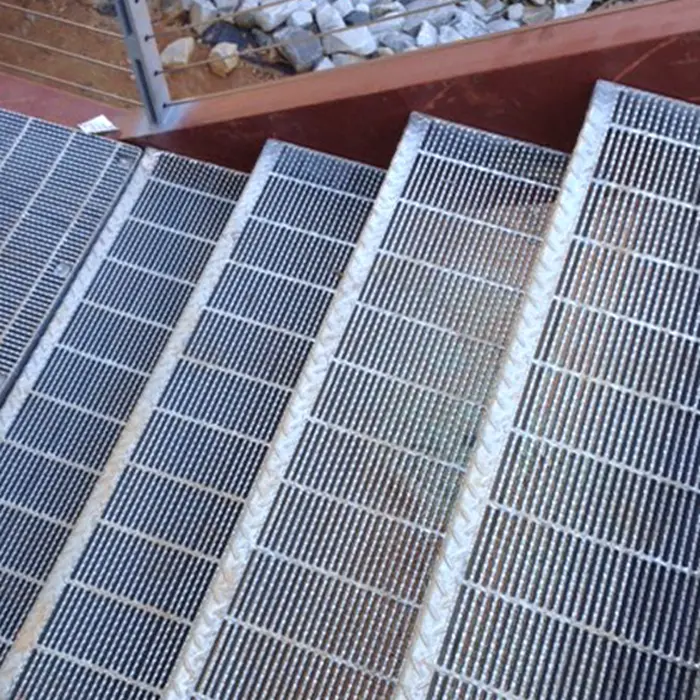
Load Bar End Plate: For stair treads, end plates with bolt holes are welded onto the bearing bars to ensure secure attachment, forming a critical part of the overall safety grating system.
Specialized Materials: The Stainless Steel Grating Specification
In applications involving high humidity, continuous moisture, chemical exposure, or stringent hygiene standards, standard carbon steel, even when galvanized, may not be suitable. This is where the stainless steel grating specification becomes essential.
1. When to Choose Stainless Steel Grating
Stainless steel grating is manufactured using grades like 304 or 316 stainless steel. These alloys offer superior inherent corrosion resistance without relying on surface coatings.
304 Grade: Suitable for most food processing, light chemical, and general sanitary applications.
316 Grade: The preferred choice for extreme environments, especially those exposed to chlorides (salt water), making it ideal for marine facilities and severe chemical plants.
2. Specification and Fabrication Differences:
The stainless steel grating specification generally follows the same dimensional logic as carbon steel (e.g., bar sizes and spacing). However, the fabrication process differs:
Welding: Due to the material's properties, stainless steel requires specialized welding techniques (like TIG welding) and post-treatment (passivation or pickling) to restore the metal's natural corrosion resistance, which can be compromised during high-heat welding.
Aesthetics: Stainless steel grating offers a bright, clean, and modern look that is often mandatory in architectural and pharmaceutical clean room environments.
Steel Grating: Selection Criteria Summary
The choice among the various steel gratings and specifications depends on a clear hierarchy of needs:
Load Requirement: Determine if standard steel walkway mesh is sufficient, or if a heavy duty grating specification is required for vehicular traffic.
Environment: Assess corrosion risk. High-risk areas (marine, chemical) demand a specific stainless steel grating specification. Moderate outdoor areas require hot-dip galvanized carbon steel.
Safety Requirement: Determine if a basic grating is acceptable, or if enhanced safety grating features (serrated bars, banding) are necessary due to slip risks.
Span: The height of the bearing bar must be adequate to support the required load over the structural span with minimal deflection.
By meticulously considering these factors and consulting with experienced manufacturers, engineers can select the precise specification of steel gratings that ensures maximum performance, longevity, and compliance.