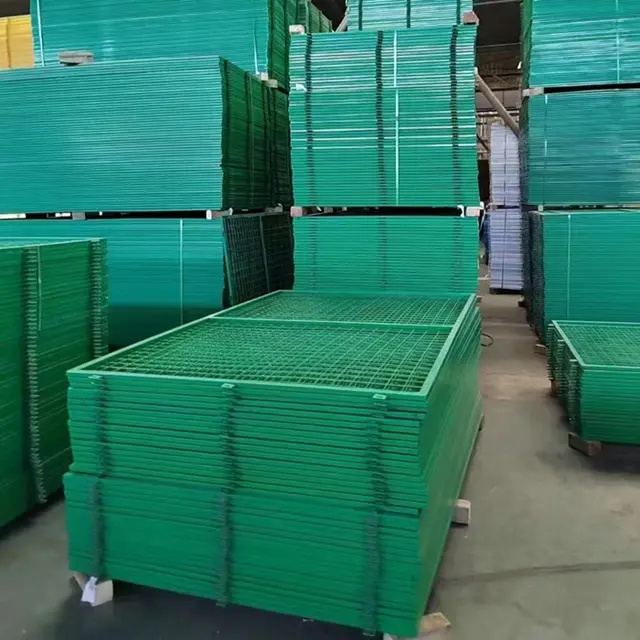

The infrastructure that defines our modern landscape—highways, overpasses, and urban interchanges—relies heavily on the invisible strength of welded steel. Among the most critical safety components of these structures is the guardrail mesh, a sophisticated barrier system designed to prevent vehicles from leaving the roadway and to protect pedestrians on elevated paths. The production of these barriers is a highly controlled technical process, particularly when applied to the bridge guardrail. Unlike standard fencing, a bridge-mounted system must withstand extreme dynamic forces, environmental corrosion, and the thermal expansion of the concrete structures it serves. The welding process is the heart of this manufacturing cycle, transforming individual steel rods and tubes into a singular, life-saving unit.
Structural Integrity Through Precision: Bridge Guardrail Design
The journey of a high-performance barrier begins long before the first spark of a welding torch, starting instead on the drafting board. The bridge guardrail design is a complex exercise in balancing aesthetics, visibility, and mechanical resistance. Engineers must consider the "impact load"—the amount of kinetic energy the mesh can absorb during a vehicle collision without failing. This design phase determines the diameter of the steel wire, the thickness of the frame tubes, and the specific density of the mesh grid.
In modern bridge guardrail design, the mesh is often integrated into a modular frame system. This allows for easier installation and replacement if a section is damaged. The design must also account for "wind loading," especially on high-altitude bridges where strong gusts could create a sail effect if the mesh is too dense. Therefore, the grid aperture is carefully calculated to allow for maximum airflow while remaining small enough to prevent a child or a small object from passing through. The intersection of these variables results in a blueprint that dictates the exact parameters of the welding process, ensuring that every joint serves the overarching goal of structural continuity.
The Fusion of Strength: The Welding Process for Anti Collision Guardrail
When the design moves into the production phase, the focus shifts to the specialized welding techniques required for an anti collision guardrail. Standard tack welding is insufficient for these systems; instead, manufacturers utilize a combination of automatic resistance welding and manual Gas Metal Arc Welding (GMAW), commonly known as MIG welding.
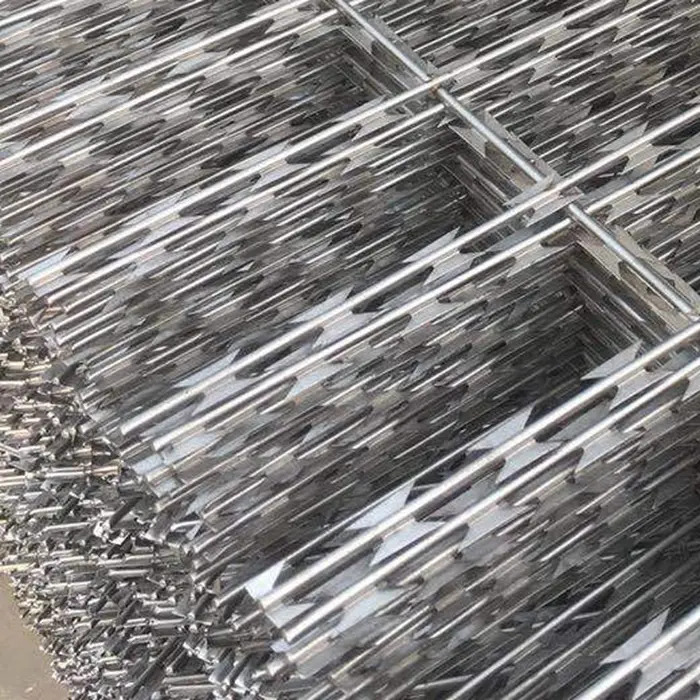
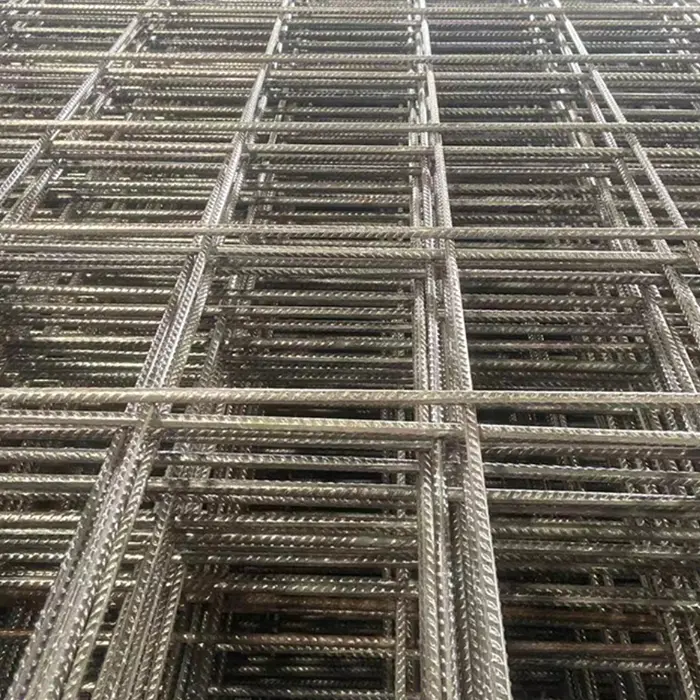
The core mesh is usually produced on a large-scale automatic welding line. Here, longitudinal and transverse steel wires are fed into a machine that uses high-voltage electricity to melt the metal at the exact point of intersection. This is known as "resistance spot welding." The machine applies immense pressure while the metal is in a molten state, creating a fusion bond that is often stronger than the wire itself. This ensures that the anti collision guardrail functions as a unified net; if one wire is impacted, the force is distributed across the entire grid, preventing a localized breach.
Once the mesh panels are formed, they must be welded into the heavy-duty frames. This is where the manual or robotic MIG welding comes into play. Welders perform "full-perimeter welds" at the junction where the mesh meets the outer frame. For an anti collision guardrail, these welds must be deep-penetrating to ensure that the mesh does not "pop" out of the frame during a high-speed impact. Quality control at this stage is rigorous, often involving ultrasonic testing or magnetic particle inspection to detect internal flaws or porosity in the welds that could compromise the barrier's integrity.
Standards of Excellence: Meeting Bridge Guardrail Requirements
Because these systems are deployed in high-stakes environments, every weld must adhere to strict bridge guardrail requirements set by transport authorities and international safety standards. These requirements specify not only the tensile strength of the welds but also the quality of the finish and the chemistry of the steel used.
One of the primary bridge guardrail requirements is the height and "snag-point" regulation. The welding must be performed in a way that leaves no sharp burrs or protruding edges that could catch on clothing or exacerbate injuries during a crash. Furthermore, the welds must be cleaned of all slag and spatter before the coating process. In the context of a bridge, where the barrier is exposed to constant vibrations and moisture, any imperfection in the weld could become a site for "stress corrosion cracking."
Environmental resilience is also a key factor. Most requirements mandate that the entire welded assembly undergo a hot-dip galvanization process or a heavy-duty powder coating. The welding process must be "coating-ready," meaning the joints must be smooth and free of trapped air pockets that could cause the coating to bubble or peel. Meeting these bridge guardrail requirements ensures that the barrier remains functional for thirty to fifty years, resisting the corrosive effects of road salt, exhaust fumes, and humidity.
The Synthesis of Form and Function
The production of guardrail mesh is a testament to the intersection of heavy industrial manufacturing and safety science. From the initial bridge guardrail design that calculates the physics of an impact, to the rigorous welding of an anti collision guardrail that provides the physical resistance, every step is a link in a chain of safety. The welding process is the most vital of these links, providing the molecular fusion necessary to hold these systems together under the most extreme conditions.
As we look to the future of infrastructure, we see the integration of smarter materials and even more precise robotic welding. However, the fundamental goal remains unchanged: to create a barrier that is as reliable as the ground beneath it. By understanding the complexity of the welding process and the strict bridge guardrail requirements that govern it, we can appreciate the immense engineering effort that goes into every mile of the modern highway. These steel grids are more than just fences; they are the silent guardians of our daily commute, built with the heat of the torch and the precision of the engineer.