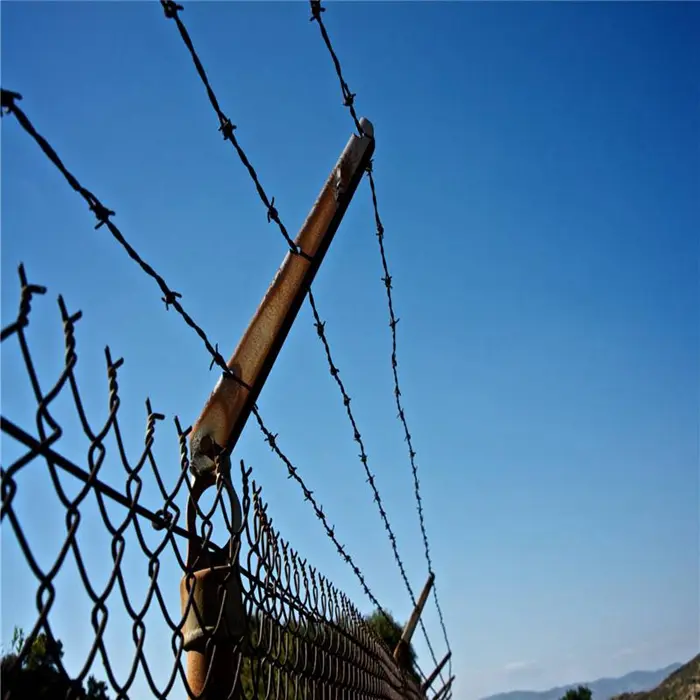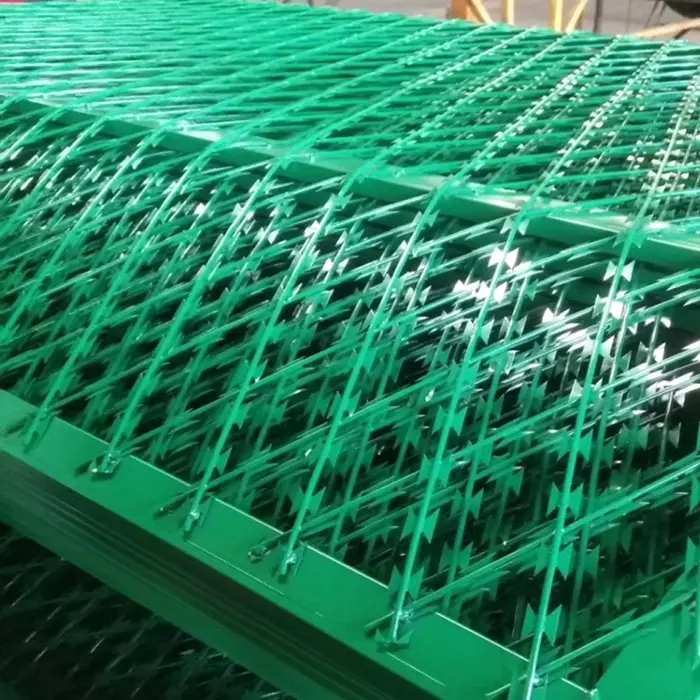

Razor barbed wire is a steel wire used for protection and anti-theft, with many sharp blades on its surface, which can effectively prevent intruders from climbing or crossing. Razor barbed wire is widely used in prisons, military bases, borders, factories, residential areas and other places where security protection needs to be strengthened. Razor barbed wire has a variety of models and specifications to choose from, such as single-blade barbed wire, double-blade barbed wire, triple-blade barbed wire, etc., which can be selected according to different needs. At the same time, razor barbed wire also has the characteristics of beauty, durability and easy installation.
In the global landscape of physical security, the name of the game is deterrence and delay. As nations and private entities seek to fortify their perimeters against increasing security threats, the demand for high-performance barriers has surged. At the heart of this global supply chain is the razor barbed wire production industry in China. Chinese factories have become the primary source for the world’s security needs, combining massive scale with advanced metallurgical engineering to produce some of the most formidable obstacles in existence.
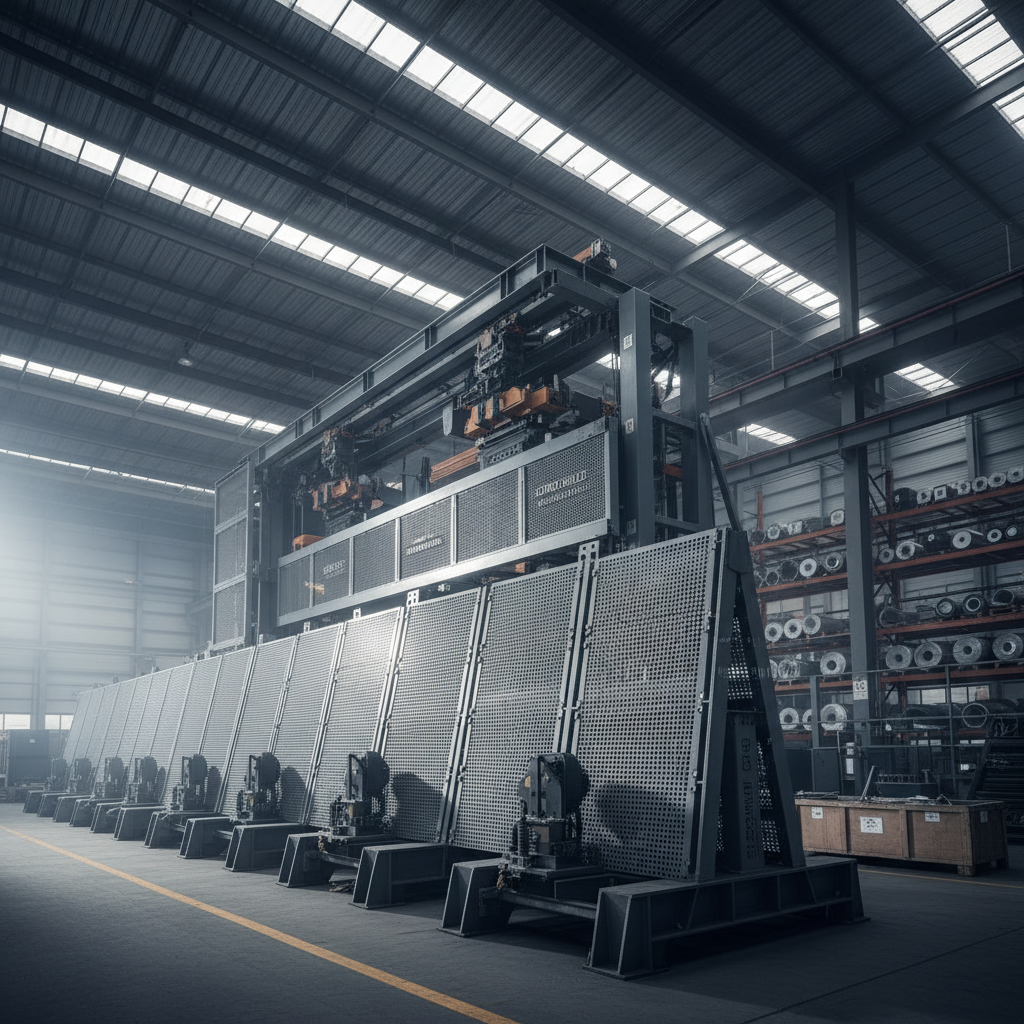
The production of razor type barbed wire within these specialized facilities is a fascinating blend of heavy industrial power and robotic precision. Far from the simple twisted wire of the past, modern razor wire is a high-tech deterrent designed to withstand both physical assault and extreme environmental conditions.
The Manufacturing of Razor Type Barbed Wire
The manufacturing of razor type barbed wire is a multi-stage process that requires specialized machinery capable of handling high-tensile steel and sharp-edged tapes. Unlike traditional barbed wire, which is made through a relatively simple twisting process, razor wire is a composite product consisting of two distinct components: a high-tensile core wire and a sharp steel tape with razor-like blades.
Within a leading China factory, the process begins in the punching department. Here, large coils of galvanized or stainless steel tape are fed into high-speed precision punching presses. These machines use a "die" to cut the tape into the specific razor profile. Depending on the order, the factory can swap dies to produce various blade shapes, such as the short blade (BTO-10), medium blade (BTO-22), or the lethal long blade (CBT-65).
Once the razor tape is punched, it is transferred to the "combining" or "clipping" station. This is the most critical stage of the production of razor type barbed wire. A high-tensile steel core wire—engineered to resist cutting with manual tools—is fed into a machine alongside the punched tape. The machine cold-rolls the tape around the core wire, crimping it so tightly that the two become a single, inseparable unit. This structural integrity is vital; if the tape were to slide along the wire, an intruder could potentially clear a section of blades to create a handhold. In a China factory, automated sensors monitor the crimping pressure in real-time to ensure that every millimeter of the wire meets international security standards.
Engineering Three-Dimensional Defense: Concertina Razor Barbed Wire
While straight strands of razor wire are effective, the gold standard for high-security perimeters is the concertina razor barbed wire. This configuration is named after the musical instrument because the coils expand and contract in a similar fashion. In the factory, transforming a single strand into a concertina coil is a labor-intensive and technically demanding process.
To create concertina razor barbed wire, the combined wire is wound onto a large drum to form coils of a specific diameter—usually ranging from 450mm to 960mm. Technicians then apply specialized heavy-duty steel clips at strategic points around the circumference of the loops. These clips join adjacent loops together. When the coil is eventually pulled open on-site, the clips prevent the loops from separating fully, creating a dense, three-dimensional "tube" of blades.
The complexity of concertina razor barbed wire lies in the clipping pattern. A "single" coil has no clips and opens like a simple spring, but a "cross" type concertina coil (the most popular for border security) uses three or five clips per loop. This creates a diamond-shaped mesh that is nearly impossible to crawl through or compress. China factories have mastered the automation of this clipping process, allowing them to produce thousands of high-quality concertina coils per day, ready to be compressed and palletized for global shipping.
Global Sourcing: The Utility of Razor Barbed Wire Fencing
The final product, razor barbed wire fencing, is exported from China to every corner of the globe. From securing national borders in Europe and Asia to protecting high-value mining operations in Africa and South America, the versatility of these systems is unmatched. The reason for this global dominance lies in the balance of cost and performance.
Chinese manufacturers utilize massive economies of scale to keep the razor barbed wire fencing price competitive while adhering to rigorous galvanization standards. Most products are treated with a heavy zinc coating or made from Grade 304/316 stainless steel. This ensures that the fence remains rust-proof and sharp even in the most hostile environments, such as salt-heavy coastal regions or humid tropical jungles.
Furthermore, razor barbed wire fencing produced in China is designed for rapid deployment. In many conflict zones or emergency border situations, security forces require a barrier that can be set up in minutes. Chinese factories produce "rapid deployment trailers" that can lay out hundreds of meters of concertina wire in seconds. This intersection of high-speed manufacturing and logistical innovation is why China remains the epicenter of the global razor wire trade.
Razor Barbed Wire Fencing: Quality Control and Environmental Standards
A modern razor wire factory in China operates under strict ISO 9001 quality management systems. Because the product is a safety-critical component, the core wire undergoes rigorous tensile testing. The standard core wire must have a tensile strength of at least 1500 MPa to ensure it cannot be snapped by hand or easily cut with standard bolt cutters.
Environmental responsibility has also become a focus. Modern factories have integrated wastewater treatment systems to manage the chemical runoff from the galvanization and pickling processes. By modernizing their facilities, Chinese manufacturers ensure that they can meet the environmental "green" standards required by European and North American importers, allowing their products to be used in public infrastructure projects worldwide.