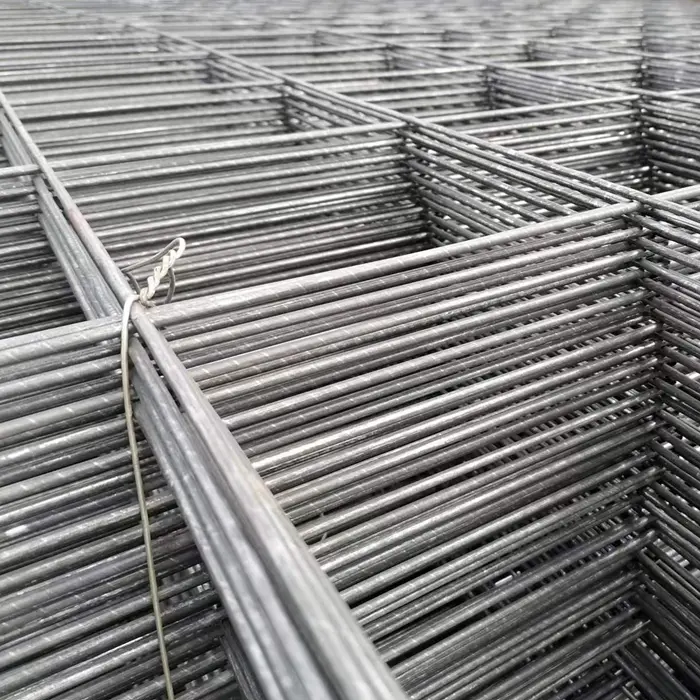

The completion of a large order of perimeter fencing marks the successful culmination of careful fabrication and specialized surface treatment. At the loading dock, hundreds of panels of the versatile bilateral guardrail stand ready for transport, destined for municipal parks, commercial green spaces, and roadside installations worldwide. The journey of these bilateral guardrail fence products—from raw steel wire to finished, weather-resistant barriers—highlights the crucial role of surface treatment in ensuring longevity and aesthetic appeal.
Fabrication and Composition: The Foundation of the Bilateral Guardrail
The bilateral guardrail net is a testament to simple, robust engineering. It is an isolation guardrail product welded with high-quality cold-drawn low-carbon steel wire and PVC wire, forming a rigid yet lightweight panel. This core structure, combined with connecting accessories and sturdy steel pipe pillars, provides the foundation for its widespread utility.
1. Defining the Bilateral Structure
The name bilateral guardrail fence refers to the simple grid structure where the main posts support the mesh panel on either side.
Material: The use of cold-drawn low-carbon steel wire provides the required tensile strength for the mesh panel, ensuring it maintains its shape and stability.
Assembly: The final rigidity of the fence is achieved when the panels are fixed to the steel pipe pillars using durable connecting accessories. This dual-sided support system allows the fence to absorb moderate impacts and resist warping.
2. The Critical Role of Surface Treatment
Before the bilateral fence can be packaged for delivery, the protective coating must be applied. This step is non-negotiable, as it is the primary defense against rust and corrosion, dictating the product's lifespan and appearance. Our production focuses on three main methodologies, catering to various budget and longevity requirements:
|
Treatment Method |
Characteristics & Colors |
Anti-Corrosion Performance |
Cost/Speed |
|
Cold Galvanizing |
Silver gray finish. |
Cheaper and faster treatment method. |
Moderate |
|
Spray Plastic |
Green, white, red, black, yellow, etc. |
Good, but susceptible to long-term abrasion. |
Cheaper and faster treatment method. |
|
Plastic Dipping (PVC) |
Grass green, dark green, white, yellow, black, red, etc. |
Common processing method; thick, uniform coating. |
Moderate |
|
Hot-Dip Galvanizing + Plastic Dip |
Grass green, dark green, etc. |
The treatment method with the best anti-corrosion performance; performance will be lifelong. |
Highest |
Bilateral Guardrail’s Prioritizing Protection: Choosing the Right Coating
The selection of the surface treatment method is based on the client's budget, expected service life, and the environmental conditions of the installation site (e.g., proximity to coastal areas or industrial pollution).
1. Economical and Efficient Options
For projects requiring a large volume of bilateral guardrail quickly and affordably, the following methods are preferred:
Cold Galvanizing: This method, yielding a silver gray finish, is a cheaper and faster treatment method. It provides basic protection suitable for short-term projects or installation in very dry, mild environments.
Spray Plastic: Also a cheaper and faster treatment method, spray plastic involves applying a polymer powder that is then baked onto the steel. It offers a wide range of aesthetic colors (green, white, red, black, yellow, etc.) and better environmental resistance than cold galvanizing, though the plastic layer is thinner than dipping.
2. The Common and Comprehensive Method: Plastic Dipping
Plastic dipping (PVC coating) is a more common processing method because it balances cost-effectiveness with durability.
Thick Coating: The dipping process creates a thicker, more comprehensive coating of plastic (available in popular colors like grass green, dark green, white, yellow, black, red, etc.) that encases the wire more fully than spraying. This depth of material provides excellent resistance against UV degradation and physical impact, ensuring the bilateral fence retains its color and protection longer.
3. Lifelong Durability: The Ultimate Anti-Corrosion Solution
For high-value, long-term infrastructure projects—such as major roads, airports, and permanent municipal installations—the ultimate solution is demanded: hot-dip galvanizing and then plastic dip treatment.
Synergistic Protection: This combination leverages the deep metallurgical bond of zinc created by hot-dip galvanizing, which seals the steel beneath the surface, followed by the external barrier provided by the thick plastic dip coating. The result is the best anti-corrosion performance, offering near-lifelong durability even in the most corrosive environments. This premium process ensures the longevity of the bilateral guardrail fence, minimizing future maintenance costs.
Bilateral Guardrail Fence: Quality Check and Packaging for Transport
With the surface treatment complete, the bilateral guardrail components—panels, posts, and accessories—are moved to the packing workshop. This stage ensures the products arrive on site in perfect condition, ready for immediate assembly.
1. Rigorous Quality Control
Before the bilateral guardrail is palletized, a final inspection confirms:
Weld Integrity: A spot check ensures no welds were damaged during the finishing processes.
Coating Uniformity: Verification that the plastic dip or galvanized coating is uniform, with no bare spots or blemishes that could introduce rust early in the product’s life.
Color Matching: Ensuring all panels and posts match the client's specified color (e.g., dark green for park integration).
2. Efficient and Safe Packaging
Effective packaging is critical to protect the anti-corrosion performance achieved by treatments like hot-dip galvanizing and plastic dipping.
Panels: Panels of the bilateral guardrail fence are stacked, interleaved with protective materials (such as cardboard or plastic sheeting) to prevent scratching the plastic coating during transit. They are then strapped securely to wooden pallets.
Posts and Accessories: Steel pipe pillars and small connecting accessories are bundled separately and often wrapped in heavy-duty plastic film to prevent abrasion and loss.
As the loaded trucks depart, carrying hundreds of units of the finished bilateral fence, they carry robust, aesthetically pleasing, and highly adaptable isolation products ready to define and secure green spaces across cities and transportation corridors. The successful execution of precise welding and the selection of the correct surface treatment method ensure the longevity of this essential infrastructure.