
Steel gratings stand as foundational structural components in modern industrial and architectural environments, utilized extensively for platforms, walkways, trench covers, and stair treads globally. A high-quality grating must deliver high load capacity, exceptional durability, and precision manufacturing. However, due to the radically different demands of various applications, no single specification is universally suitable. Consequently, types of steel grating are categorized based on loading, environmental conditions, and aesthetic requirements, each offering unique engineering value.
Standard Industrial Specification: The Foundational Floor Grid Mesh Solution
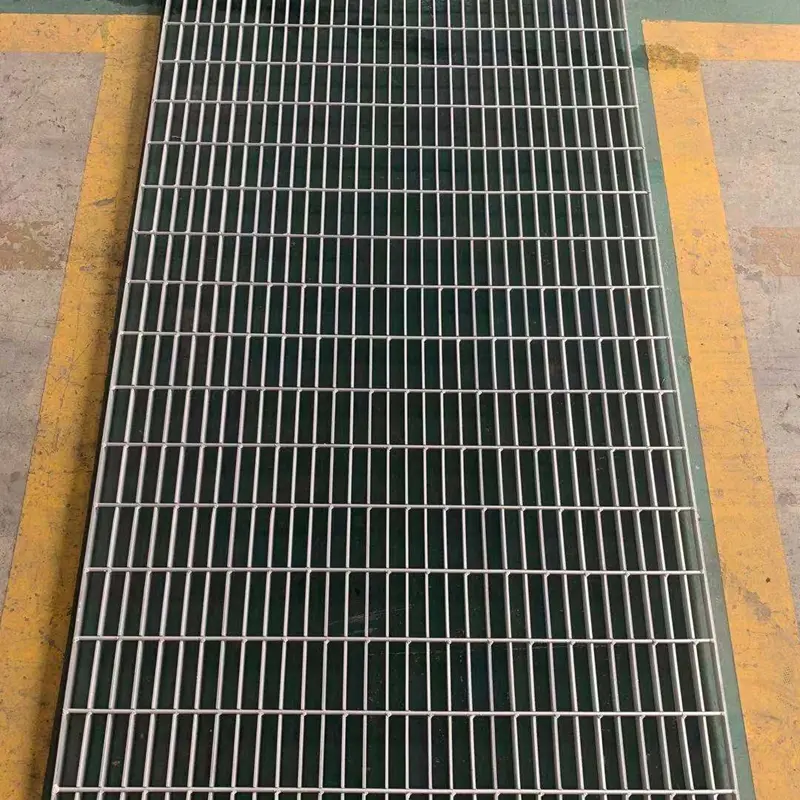
The Standard Industrial Specification represents the most common type of grating, achieving the optimum balance among cost, strength, ventilation, and light penetration. It is the primary choice for the vast majority of pedestrian walkways and light-to-medium-duty working platforms.
1. Core Structure and Specification Parameters
Standard grating is characterized by the use of bearing bars that are modest in height and thickness. This configuration is intentional, aiming for maximum efficiency in material use while maintaining adequate strength for its intended purpose—supporting human foot traffic and minor equipment loads. The spacing between the load-carrying bars and the cross rods is set to optimize the openness of the mesh, thereby facilitating excellent light and air transmission. This structural arrangement makes it highly beneficial in multi-story industrial facilities where light penetration to lower levels is a priority.
2. Manufacturing Efficiency and Service Life
This ubiquitous floor grid mesh is typically produced using the Electro-Forged Welding process. This method leverages intense heat and pressure to resistance-weld the cross rods to the bearing bars, resulting in rugged, monolithic panels with exceptionally strong and stable joints that are highly resistant to fatigue failure.
Cost-Effectiveness: The manufacturing process is streamlined and highly efficient, allowing for cost-effective mass production and making standard grating an economically sound choice for covering vast areas.
Surface Finish: Standard duty grating is almost universally hot-dip galvanized. This process applies a thick, sacrificial zinc coating over the steel surface, providing robust and long-lasting protection against corrosion in typical industrial and outdoor environments.
Extreme Load Requirements: Heavy Duty Grating Specification
When the load capacity demands exceed light and pedestrian traffic—such as in areas supporting heavy trucks, forklifts, cranes, or specialized machinery—the heavy duty grating specification is mandatory.
1. Structural Reinforcement for Super-Heavy Loads
The core principle of the heavy duty grating specification is a massive increase in the physical dimensions and structural density of the bearing bars to handle intense concentrated stresses. This involves utilizing bars that are significantly thicker and much deeper than those used in standard grating. The increased depth is the most effective way to dramatically enhance the grating’s stiffness and ability to resist bending or deflection under extreme loads.
Furthermore, to ensure the heavy weight is distributed as uniformly as possible and to prevent localized stress points, the spacing between the bearing bars is often reduced. This creates a denser configuration capable of safely absorbing and dissipating the energy of impact and continuous vehicular traffic.
2. Key Applications and Installation Requirements
The structural rigidity of this types of steel grating makes it indispensable in critical infrastructure:
Critical Applications: It is the required solution for trench covers on main highways, heavy-haul dockyards, bridge deck surfaces, and access floors in large-scale metallurgical or heavy machinery manufacturing bases.
Installation Rigor: Installation of heavy-duty grating cannot rely on light fasteners. It typically requires heavy-duty clips or, more often, direct welding to the supporting steel structure. This ensures the grating panels remain absolutely secure and static under high, dynamic vehicular loading, thereby maintaining structural integrity and safety across the facility. The sheer thickness of the material also contributes to an extended service life under constant stress and abrasion.
Specialized Environments: Stainless Steel Grating Specification and Hygiene
In contrast to the emphasis on brute strength in the heavy-duty sector, certain environments prioritize innate corrosion resistance, strict hygiene standards, or superior aesthetic appeal. In these scenarios, the stainless steel grating specification is the only suitable choice.
1. Material Purity and Environmental Suitability
The stainless steel grating specification relies on high-grade alloys, primarily Grade 304 or Grade 316. These materials offer intrinsic resistance to rust and chemical attack, making them independent of external surface coatings.
Chemical Resistance: Grade 316, specifically, is preferred for highly corrosive environments, including marine applications, severe chemical processing plants, and areas exposed to salt and chlorides, due to its enhanced elemental composition.
Hygiene Mandate: Grade 304 is the standard in food and beverage processing facilities, pharmaceutical plants, and hospitals. Its non-porous surface is easy to sanitize and will not contaminate products, meeting the highest regulatory demands for cleanliness.
2. Fabrication and Aesthetic Finishing
While the dimensional specifications of stainless steel grating (bar spacing, size) can mirror carbon steel, the fabrication and finishing processes are far more demanding to preserve the material's unique properties.
Passivation: After the welding process, which can compromise the steel's passive protective layer, the grating must undergo passivation (a chemical treatment). This vital step chemically cleans the surface and encourages the rapid reformation of the protective chromium oxide film, restoring the material's maximum corrosion resistance.
Aesthetic Value: The resulting floor grid mesh has a signature bright, clean, and polished finish. This aesthetic makes it an ideal choice for modern architectural projects, commercial display areas, and high-end public transit stations where durability must be paired with a premium, professional appearance.
Whether the requirement is for the sheer strength of the heavy duty grating specification to support vehicular traffic, the economic balance of the standard floor grid mesh for walkways, or the specialized durability of the stainless steel grating specification to meet stringent hygiene codes, selecting the appropriate types of steel grating is fundamental to ensuring the safety, long-term durability, and overall success of any project.