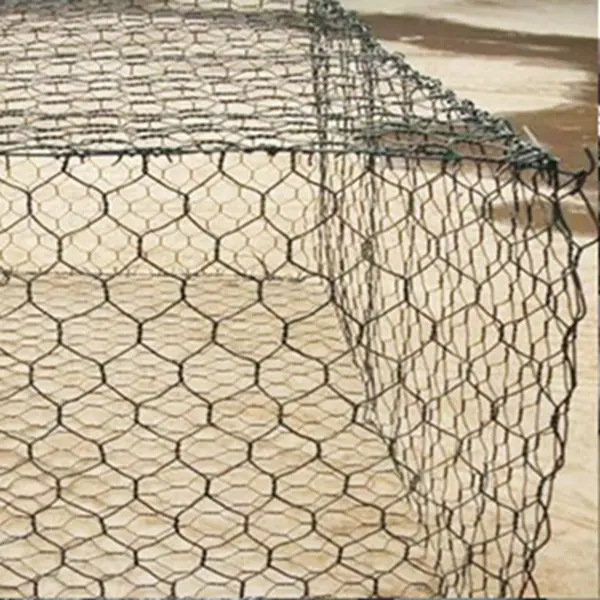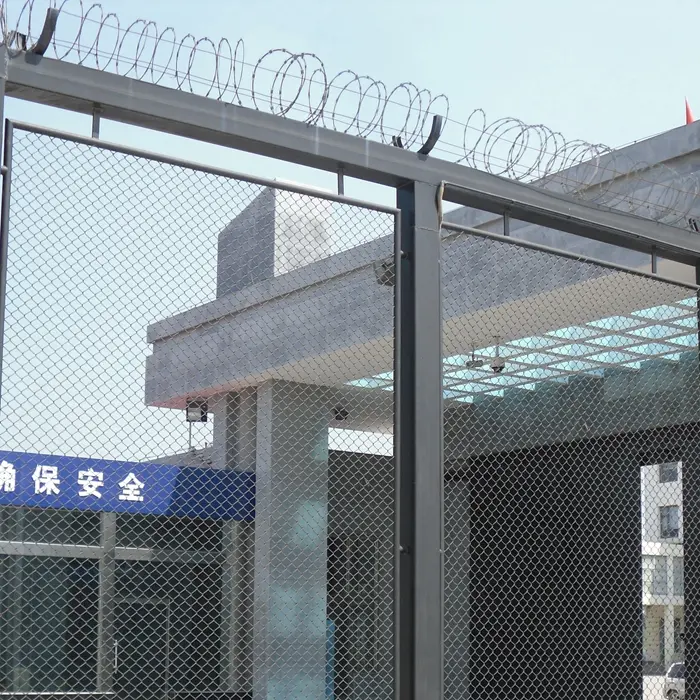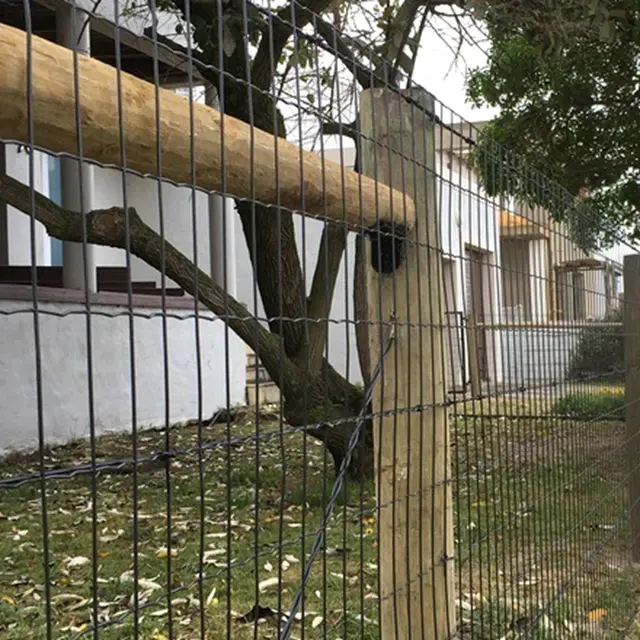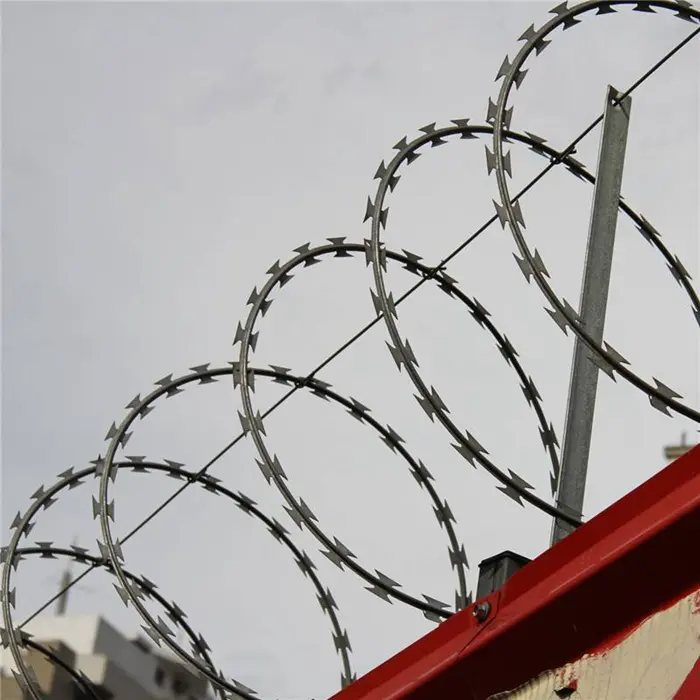

Chain link fence is a common fence material, also known as "hedge net", which is mainly made of iron wire or steel wire. It has the characteristics of small mesh, thin wire diameter, and beautiful appearance. It can beautify the environment, prevent theft, and prevent the invasion of small animals.
Chain link fence is widely used, most commonly used as fences and isolation facilities in gardens, parks, communities, factories, schools and other places.
Chain link fencing is one of the most versatile and widely used perimeter solutions in the world. From residential backyards to high-security industrial zones, its "diamond mesh" design provides a balance of strength, visibility, and cost-effectiveness. However, the manufacturing process behind this ubiquitous material involves precise engineering and specialized machinery to ensure the final product meets safety and durability standards.
Core Manufacturing: From Wire Rod to Diamond Mesh
The production begins with high-quality steel wire rods. These rods undergo a "cold drawing" process to achieve the desired gauge (thickness). Once the wire is at the correct diameter, it is usually galvanized (dipped in molten zinc) or coated with vinyl to prevent rust.
The transformation into a fence occurs in an automated weaving machine. Two wires are twisted around each other in a rotating flat mandrel, creating a "corkscrew" shape. These interlocking spirals form the characteristic diamond pattern. At the end of the weaving process, the edges are either "knuckled" (bent over) or "twisted" (barbed) depending on the required security level.
Adaptability in Construction: The Temporary Chain Link Fence
One of the most common applications of the manufacturing process is the creation of the temporary chain link fence. Unlike permanent installations, these fences are processed to be modular and lightweight.
Processing for Portability
To create a high-quality temporary system, the mesh is not buried in the ground. Instead, the manufacturing focus shifts to the outer frame:
Panel Assembly: The chain link mesh is stretched over a frame made of galvanized steel tubing.
Welding Techniques: High-frequency welding is used at the corners of the frame to ensure it can withstand frequent loading and unloading from trucks.
Base Supports: Instead of permanent posts, these fences are processed with detachable "feet" (often heavy plastic bases filled with sand or concrete, or steel plates).
This processing allows the fence to be deployed rapidly for construction sites, festivals, or emergency crowd control without damaging the terrain.
Enhancing Aesthetics and Seclusion: Chain Link Fence Privacy
While standard chain link is prized for its transparency, many residential and commercial users require chain link fence privacy. The processing for privacy involves integrating secondary materials into the wire matrix.
The Slat Insertion Process
Privacy is typically achieved through "slats"—long strips made of High-Density Polyethylene (HDPE) or aluminum.
Factory Insertion: Some high-end privacy fences are processed with slats already woven into the mesh during the manufacturing stage.
Post-Installation Kits: More commonly, the mesh is manufactured with specific diamond sizes (usually 2 inches or smaller) to snugly hold slats that are inserted manually after the fence is up.
Screening Attachments: Another method involves processing heavy-duty fabric or "windscreen" mesh that is fastened to the chain link via grommets, providing up to 90% opacity.
Hardening the Perimeter: Chain Mesh Security Fencing
When the application shifts from a simple boundary to a high-risk area, the manufacturing undergoes "hardening" to become chain mesh security fencing. This is the version found around power plants, airports, and correctional facilities.
Security-Focused Processing
To upgrade a standard fence to security grade, manufacturers adjust several variables:
Wire Gauge: The wire is processed to be much thicker (typically 6-gauge or 9-gauge), making it resistant to manual cutting tools.
Mesh Size: The diamond apertures are reduced (often to 1 inch or less) to create a "mini-mesh" that is difficult to climb.
Coating Durability: For industrial sites, a PVC-coated finish is applied over the galvanized core. This provides double protection against corrosive chemicals and environmental wear.
Bottom Rail Integration: Unlike residential fences that use a tension wire at the bottom, security fencing is processed with a solid steel bottom rail to prevent intruders from prying the mesh upward.
Flexibility for Changing Sites: Removable Chain Link Fence
In many industrial or municipal settings, there is a need for a removable chain link fence that is more robust than a temporary panel but less permanent than a standard fence. This requires a unique approach to the "sleeve" and "post" processing.
Engineering for Intermittent Use
The secret to a successful removable system lies in the ground-level engineering:
Ground Sleeves: Instead of pouring concrete directly around the fence post, a slightly larger steel sleeve is cast into the ground.
Locking Mechanisms: The fence posts are processed with specialized locking pins or bolts that secure them into the sleeve.
Cap Seals: When the fence is removed, a flush-mounted cap is processed to cover the hole, preventing trip hazards and keeping debris out of the socket.
This system is ideal for seasonal venues or warehouse areas where large machinery occasionally needs wide-open access.
Vertical Security Upgrades: Extension for Chain Link Fence
The final stage of processing for many high-security perimeters is the extension for chain link fence. This involves the hardware that allows the fence to reach greater heights or carry additional deterrents.
Types of Extensions
Barbed Wire Arms: These are "V-shaped" or "45-degree" extensions that are bolted to the top of the fence posts. They are processed to hold three to six strands of barbed wire or a coil of razor wire.
Vertical Post Extensions: If a facility needs to increase a 6-foot fence to an 8-foot fence, "sleeve-on" extensions are manufactured to fit over existing posts, allowing for the addition of more mesh.
Tension Bars and Bands: These components are processed to ensure that the vertical extensions can hold the weight of the new mesh without buckling the original structure.
Quality Control and Finishing Of Chain Link Fence
Regardless of the fence type, the final stage of processing is quality assurance. High-quality chain link mesh must have uniform diamond shapes and consistent tension.
Galvanization Testing: Samples are tested for "ounces per square foot" of zinc to ensure long-term rust resistance.
Tensile Strength Tests: The wire is pulled to its breaking point to verify it meets ASTM (American Society for Testing and Materials) standards.
Coating Adhesion: For PVC-coated fences, the bond between the plastic and the metal is tested to ensure it won't peel or crack under extreme temperature fluctuations.
Chain Link Fence: Choosing the Right Process for the Job
The processing of a chain link fence is far more complex than it appears. From the rapid assembly of a temporary chain link fence to the specialized "mini-mesh" of chain mesh security fencing, every step is designed to meet a specific human need. Whether you prioritize chain link fence privacy for a home or require a removable chain link fence for a warehouse, understanding the manufacturing journey ensures you invest in a system that is built to last.
By utilizing an extension for chain link fence, even an existing perimeter can be upgraded to modern safety standards, proving that this classic design remains one of the most adaptable tools in the security industry.