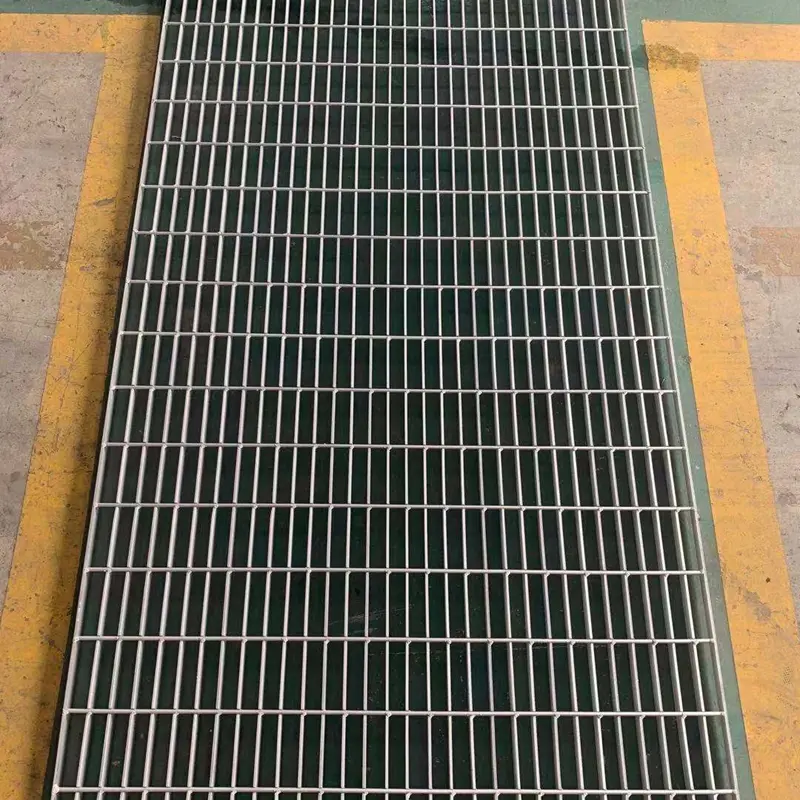

The steel grating has good ventilation and lighting, and due to its excellent surface treatment, it has good anti-skid and explosion-proof properties.
Because of these powerful advantages, steel gratings are everywhere around us: steel gratings are widely used in petrochemical, electric power, tap water, sewage treatment, ports and terminals, building decoration, shipbuilding, municipal engineering, sanitation engineering and other fields . It can be used on the platforms of petrochemical plants, on the stairs of large cargo ships, in the beautification of residential decorations, and also in drainage covers in municipal projects.
Stainless steel grating is an indispensable component across various industries, particularly those demanding stringent levels of hygiene, corrosion resistance, and structural integrity. From food processing plants and chemical refineries to pharmaceutical manufacturing and marine environments, the choice of flooring and access platforms critically impacts operational safety and longevity. While the inherent properties of stainless steel provide a strong foundation for durability, the specific surface finish applied plays a decisive, often underestimated, role in extending the grating’s service life, minimizing maintenance, and ensuring peak performance.
Understanding the Importance of Passivation in Stainless Steel Grating
Stainless steel derives its "stainless" quality from a thin, invisible, and self-repairing layer of chromium oxide that forms on its surface—a process known as passivation. This passive film is the primary defense against corrosion. However, the manufacturing process of grating—including cutting, welding, and grinding—can disrupt this layer.
The Impact of Fabrication on the Passive Film
During fabrication, the grating bars are cut and welded. These mechanical and thermal processes introduce three potential problems:
Free Iron Contamination: Iron particles from cutting tools or embedded grinding debris can adhere to the stainless steel surface. This "free iron" is highly susceptible to rust, leading to pitting corrosion that compromises the integrity of the true stainless steel beneath.
Heat Tint/Weld Discoloration: High-temperature welding causes chromium to combine with oxygen to form a thicker, less protective oxide layer (heat tint) near the weld zone. This area is drastically depleted of the chromium needed for proper passivation and becomes a corrosion weak point.
Mechanical Stress: Aggressive machining can leave surface imperfections that become nucleation sites for corrosive attack.
To restore the full potential of the metal, a post-fabrication surface finish, typically chemical passivation or electropolishing, is essential. Chemical passivation involves treating the steel with a mild acid solution (often nitric acid) to dissolve the free iron and promote the formation of a uniform, robust chromium oxide layer. This critical step ensures that the stainless steel grating is truly corrosion-resistant from the moment of installation.
Enhancing Durability for Heavy Duty Stainless Steel Grating
In industrial settings that require heavy duty stainless steel grating, such as areas subjected to forklift traffic, heavy equipment storage, or continuous impact loading, durability goes beyond chemical resistance—it involves mechanical resilience. The surface finish contributes to this mechanical longevity in several ways, primarily through electropolishing.
The Role of Electropolishing
Electropolishing is an electrochemical process that removes a thin layer of metal from the surface, effectively smoothing out micro-peaks and valleys created during fabrication. This process offers several key advantages for heavy-duty applications:
Micro-Smoothening: By leveling the microscopic surface, electropolishing reduces stress concentration points and the potential for fatigue cracking under repetitive heavy loads. A smoother surface is less likely to hold debris that could accelerate wear.
Maximum Corrosion Resistance: Electropolishing maximizes the chromium-to-iron ratio on the surface, producing the most chemically passive and durable film possible. This is vital when the heavy duty stainless steel grating is exposed to harsh chemicals or high-salinity environments (e.g., coastal industrial sites).
Reduced Product Adhesion: A microscopically smooth surface reduces the surface area available for organic material, chemicals, or debris to adhere. This makes cleaning simpler, faster, and more effective—a critical factor for maintaining hygiene and operational flow in demanding food and chemical sectors.
By achieving this superior surface quality, electropolishing significantly extends the functional life of heavy duty stainless steel grating by protecting it from both chemical degradation and premature mechanical wear.
Meeting Hygiene Standards with Specialized Stainless Steel Floor Grates
The application of stainless steel floor grates in industries like food, beverage, and pharmaceuticals is driven by the need for superior sanitation. In these environments, the grating's surface finish is directly linked to compliance and safety.
Hygienic Surface Finishes (Ra Values)
The cleanliness of a metal surface is quantified by its surface roughness, measured as the arithmetic average roughness Ra . The lower the Ra value, the smoother the surface and the more hygienic the finish.
As-Fabricated (Mill Finish): Typically has a higher Ra value, with micro-grooves that can trap bacteria, biofilms, and cleaning chemicals, making sanitation difficult and increasing the risk of contamination.
Mechanical Polishing (Grinding): Can achieve moderate smoothness, removing major defects and improving aesthetics, but often leaves directional scratch marks that can still harbor microbes.
Electropolishing: Consistently achieves the lowest Ra values, producing a near-mirror finish. This ultra-smooth surface is hostile to microbial growth and allows for 100% effective cleaning with minimal effort.
For stainless steel floor grates that are constantly subjected to organic materials and cleaning chemicals, achieving a low Ra value through electropolishing is the most effective way to prevent microbiologically influenced corrosion (MIC) and ensure regulatory compliance, thereby drastically extending the grate's service lifespan in high-purity environments.
Stainless Steel Grating: The Economic Benefit of Superior Finish
In conclusion, the decision regarding the surface finish of stainless steel grating is an economic one. While stainless steel is inherently corrosion-resistant, a poor or omitted post-fabrication finish will inevitably lead to localized corrosion (pitting, crevice corrosion) and premature failure, forcing expensive replacements and causing costly operational downtime.
The application of chemical passivation and, in severe environments, electropolishing, transforms the grating from a merely corrosion-resistant component into a highly durable, resilient, and hygienic long-term asset. This attention to the surface finish is the key differentiator that allows heavy duty stainless steel grating and specialized stainless steel floor grates to reliably deliver the 30+ year service life expected by modern industry standards. Investing in the proper surface treatment is the most effective insurance against the corrosive challenges of the industrial landscape.