
The landscape of perimeter security is fundamentally defined by the materials used to establish boundaries. At the pinnacle of physical security stands blade barbed wire, a formidable barrier known globally as razor blade barbed wire. It represents a significant technological and protective upgrade over traditional fencing, offering a level of deterrence and structural integrity demanded by high-risk environments. As seasoned barbed wire suppliers, we recognize that understanding the nuances of this product—from its fabrication to its deployment—is essential for optimizing security protocols worldwide.
Engineering Deterrence: The Structure of Razor Blade Barbed Wire
The sheer effectiveness of razor blade barbed wire lies in its aggressive design, moving beyond the simple entanglement of older fencing to create a tangible, high-risk obstacle.
1. The Blade Profile and Material Integrity
The core difference is the blade itself. Unlike the rounded barbs of conventional metal barbed wire, the blades are formed by pressing sheets of high-grade metal, creating a sharp, flat, and extremely effective cutting edge.
Material Composition: For maximum durability and edge retention, common razor wire mesh is constructed from stainless steel sheets or hot-dip galvanized steel sheets. The choice of stainless steel (often Type 304 for superior corrosion resistance) ensures the blades retain their integrity and sharpness indefinitely, even when exposed to corrosive industrial atmospheres or coastal moisture.
High Protection Factor: The razor wire possesses sharp spikes that cannot be touched. This feature provides the highest level of physical and psychological deterrence. Security experts universally agree that the high protection offered by blade barbed wire surpasses all other forms of non-lethal perimeter wire, requiring specialized tools and substantial time to breach, thereby delaying intrusion attempts effectively.
2. The Spiral Cross Style: A Complex Barrier
Structural integrity is amplified by the configuration of the wire, distinguishing it visually and functionally from single-strand products.
Aesthetic and Functional Upgrade: The wire features a spiral cross style (Concertina Coils), which, as the source notes, gives it a distinct appearance that is more beautiful than the single style of galvanized barbed wire. This organized, dense coil arrangement communicates a clear, professional security posture.
Three-Dimensional Obstacle: The structure is achieved by using heavy-duty clips to join adjacent loops of the wire at multiple points. This creates a tangled, three-dimensional helix that resists compression, entanglement, and simple cutting. Any force applied to one section is distributed across the coil, reinforcing the barrier.
Durability Through Finishing: Lifespan of the Blade Barbed Wire
The formidable security of razor blade barbed wire would be worthless without the durability to withstand years of environmental assault. Surface treatment is the cornerstone of its longevity.
1. Galvanization: The Adhesion Advantage
The superior durability stems from the rigorous galvanization process:
Optimized Adhesion: The galvanized surface treatment allows it to better adhere to the surface of the barbed wire, because the galvanized blade barbed wire has higher durability. This statement highlights the metallurgical benefit, where the zinc coating integrates deeply with the steel substrate.
Corrosion Mitigation: Hot-dip galvanization provides a thick layer of zinc, essential for protecting the steel core. This is vital because the sharp stamping process used to create the blades can expose the steel. The thick zinc coating ensures that even if microscopic imperfections exist, the sacrificial protection mechanism prevents rust from compromising the wire's tensile strength.
2. Comparison with High Tensile Barbed Wire
While high tensile barbed wire is designed to resist breaking due to its low carbon, high-strength material composition, its protective coating is equally vital. However, when comparing durability, the complexity of blade barbed wire demands a more thorough and robust coating application (often enhanced by additional PVC coating) to protect the multiple folds and cutting edges. This multi-layered approach ensures the razor blade barbed wire remains functional and structurally sound longer than many traditional wire types.
Market and Manufacturing: Different Types of Barbed Wire
As specialized barbed wire suppliers, manufacturers must produce different types of barbed wire fencing to address the varying security needs across sectors—from agricultural barriers to maximum-security prisons.
1. Product Spectrum: From Low-Stress to Maximum Security
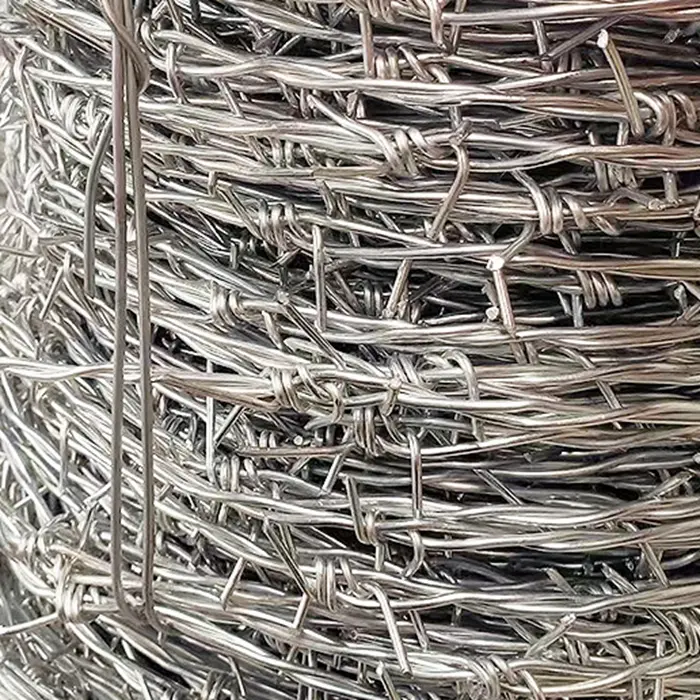
Metal Barbed Wire (Standard): Used for simple boundary demarcation, agriculture, and livestock control where cost is a primary driver. It offers minimal security against determined human intrusion.
High Tensile Barbed Wire: Chosen for its ability to maintain high tension over long spans with fewer intermediate posts, offering efficiency in large farm or utility projects. It provides a better physical barrier than standard wire but lacks the deterrent factor of razor wire.
Blade Barbed Wire (Various Profiles): The different types of razor wire offered vary based on the blade's profile (short, medium, long barb) and the gauge of the core wire. Higher gauge wire and longer blades are specified for areas requiring the highest level of threat mitigation, such as military perimeters and strategic facilities.
2. Deployment Configurations
The configuration of the razor blade barbed wire itself also constitutes different "types" for application purposes:
Concertina Coils: The standard, dense spiral cross style used for rapid deployment and topping existing fences or walls.
Flat Wrap Coils: Designed to be installed flush against the vertical fence fabric or wall, offering high security without the large footprint of the concertina coil, often used in urban or industrial settings where space is limited.
Straight Line Barriers: Rigid strands of razor wire used in parallel lines, sometimes embedded within multi-layered fence systems.
The evolution from traditional metal barbed wire to the highly sophisticated blade barbed wire reflects the escalating demands of modern security. The razor blade barbed wire achieves its formidable status through the strategic combination of its complex spiral cross style and the exceptional durability provided by its galvanized surface treatment. It provides superior, near-lifelong high protection, acting as the most effective physical and psychological deterrent available among all different types of barbed wire fencing. As reliable barbed wire suppliers, we confirm that investing in this high-quality barrier is the most effective way to secure critical assets against unauthorized access.