
In the modern security landscape, the necessity for robust physical barriers has never been more critical. As threats evolve, the demand for reliable and long-lasting obstacles has led to the widespread adoption of galvanised steel barbed wire. This specialized fencing material is not merely a boundary marker but a high-tensile physical deterrent designed to protect high-value assets, critical infrastructure, and private estates. Among its various configurations, the concertina-style deployment stands as the pinnacle of perimeter hardening. By understanding the material science behind the galvanization process and the strategic design of a professional security barbed wire fence, facility managers and homeowners can implement a defense system that withstands both human aggression and environmental degradation.
The Chemical Advantage: The Longevity of Galvanised Steel Barbed Wire
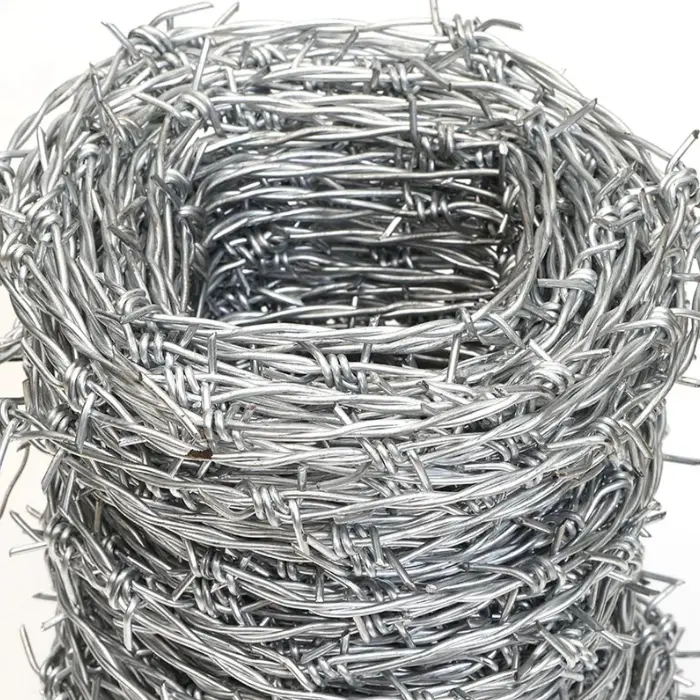
The primary challenge for any outdoor security installation is the relentless force of nature. Rust is the silent enemy of steel, capable of compromising the structural integrity of a fence within a few years of exposure to moisture and oxygen. This is why galvanised steel barbed wire has become the industry standard for professional security. The galvanization process—specifically hot-dip galvanizing—involves submerging the steel wire and its sharp barbs into a bath of molten zinc at high temperatures. This process does not just coat the wire but creates a series of zinc-iron alloy layers that are metallurgically bonded to the steel.
Zinc acts as a sacrificial anode, meaning that even if the wire is scratched by an intruder’s tools or a falling tree branch, the surrounding zinc will corrode before the underlying steel is touched. This prevents the spread of rust throughout the core of the wire. Furthermore, the alloy layers formed during this thermal process are harder than the base steel itself, making the wire more resistant to mechanical wear and accidental cutting. A high-quality galvanized finish can protect a security fence for several decades without requiring painting or chemical treatments, ensuring that the barbs remain sharp and the core wire remains under high tension even in coastal areas where salt air usually accelerates corrosion.
Strategic Perimeter Hardening: Designing a Security Barbed Wire Fence
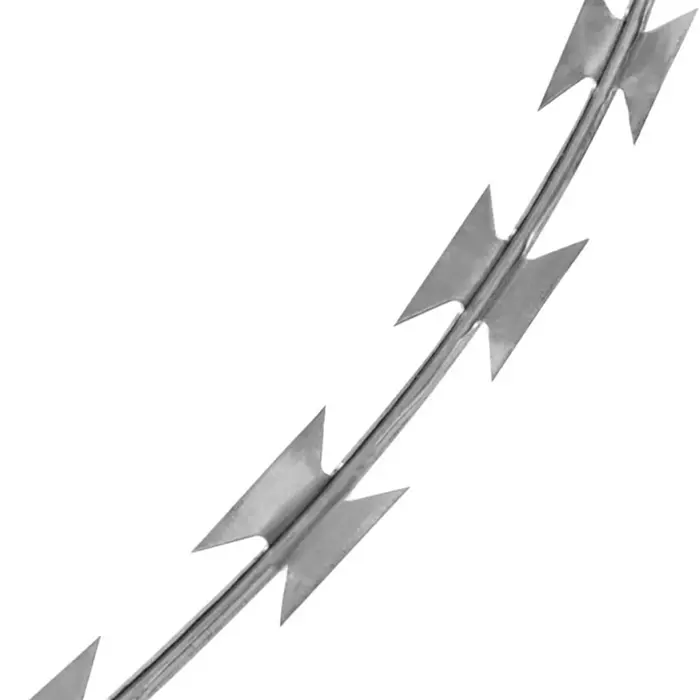
The effectiveness of a perimeter depends largely on its design and the layer of intimidation it provides. A security barbed wire fence is rarely a single strand of wire but rather a complex architectural system. In professional settings, this often takes the form of concertina wire, which consists of large coils clipped together at multiple points to form a dense, three-dimensional cylinder. When designing such a fence, engineers focus on depth and height to create a barrier that cannot be easily scaled or bypassed. Unlike a flat fence that can be covered with a heavy blanket, a concertina coil creates a deep obstacle that is nearly impossible to compress.
The high-tensile nature of the galvanised wire ensures that if an intruder attempts to cut one section, the rest of the coil maintains its shape and refuses to collapse. Strategic deployment often includes mounting the wire on outrigger brackets that angle the strands outward at a specific degree to prevent scaling. The gleaming silver finish of the galvanization also provides a high-contrast visual signal that an area is restricted, which often stops an intrusion attempt before physical contact is even made. By layering these coils at both the base and the top of a primary fence, a facility achieves a comprehensive barrier that prevents both tunneling and climbing.
Modern Adaptations: Barbed Wire for Home Security
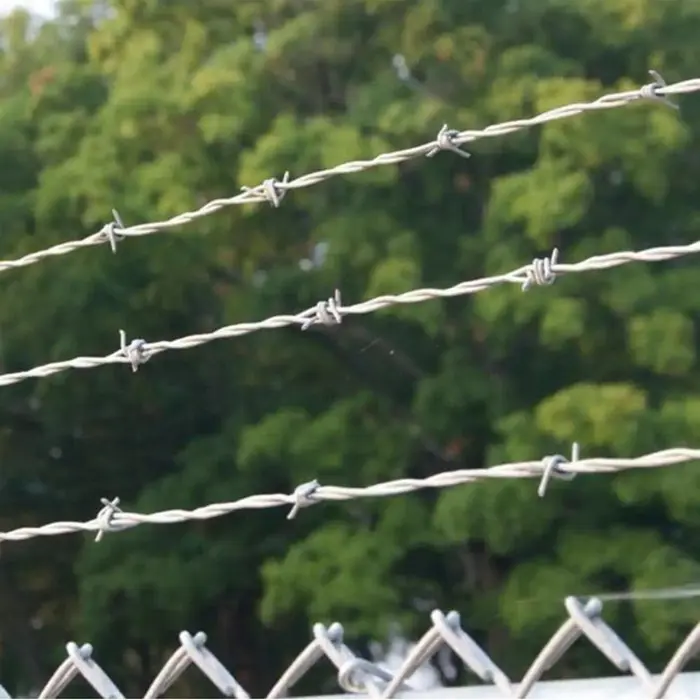
While barbed wire is often associated with military bases or industrial sites, there is an increasing trend in the use of barbed wire for home security in rural and high-risk residential areas. Homeowners are moving away from purely aesthetic wooden fences toward more formidable barriers that protect livestock, expensive farm machinery, and family privacy. When implementing this for a residential property, the focus often shifts toward an economical balance of protection and liability. Many homeowners choose to install high-tensile galvanised wire on top of existing brick walls or chain-link structures to provide an anti-climb feature that is difficult to bypass without specialized equipment.
This type of security is particularly valued on large acreages where electronic motion sensors would be cost-prohibitive to install and maintain. The wire remains safe for domestic animals by preventing rusty snags while effectively keeping predators and trespassers from entering the property. It represents a permanent security solution that provides peace of mind for property owners who may not be on-site at all times. The simplicity of the installation, combined with the extreme durability of the galvanized coating, makes it an ideal choice for securing large perimeters against a wide range of threats without the need for constant supervision.
Galvanised Steel Barbed Wire: Integration and Installation Excellence
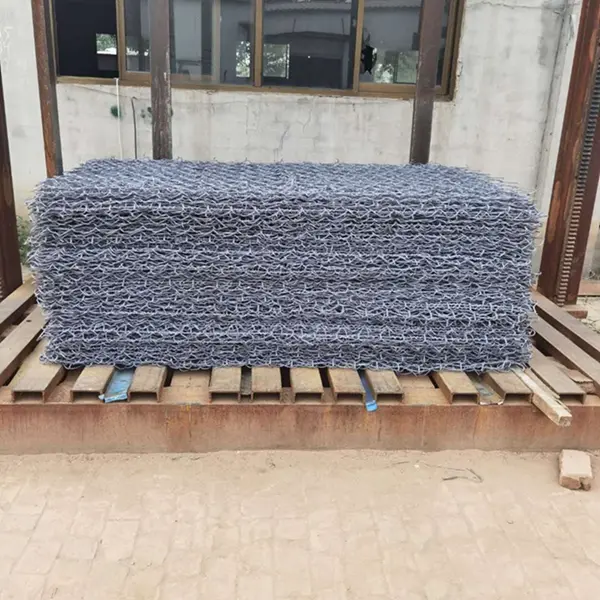
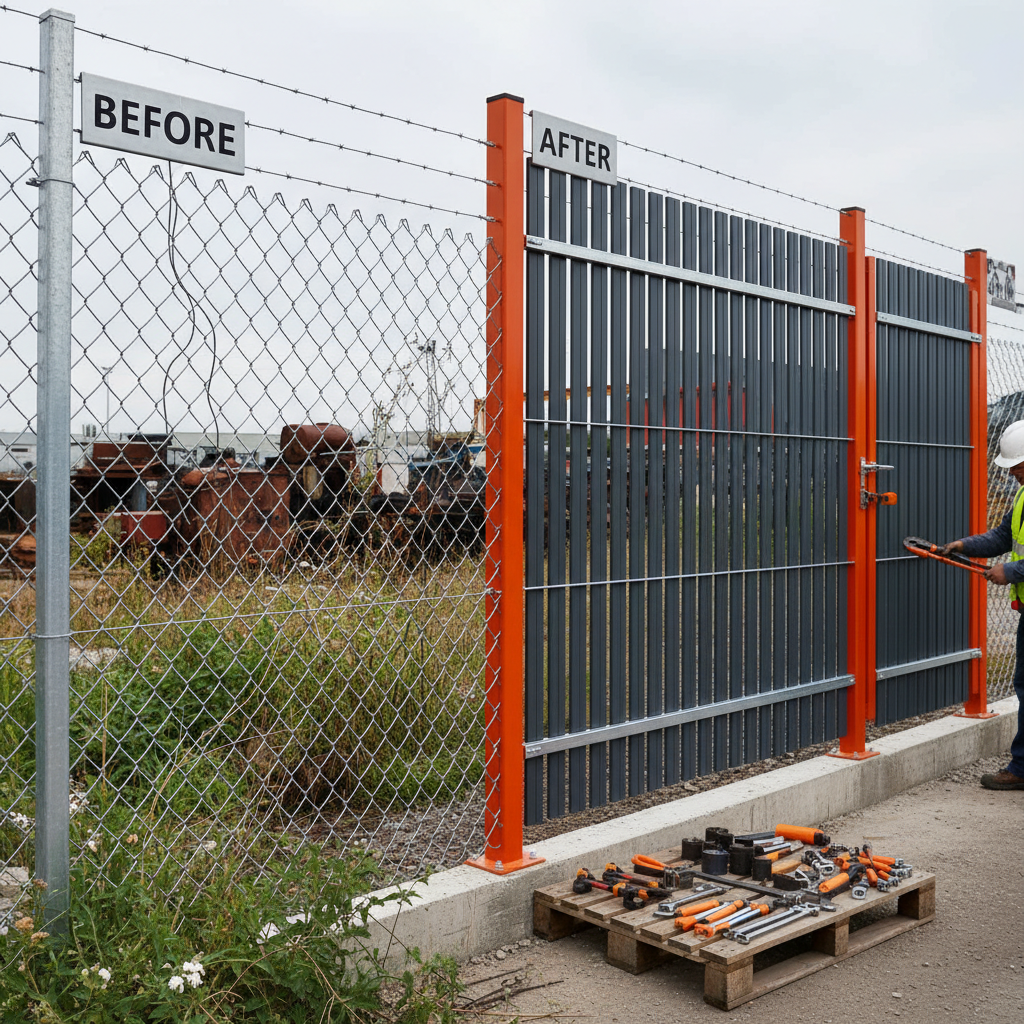
The final efficacy of a security installation rests on the quality of its tension and the integration of its components. Even the highest grade of wire will fail if it is allowed to sag or if the posts are not properly anchored. Professional installers use specialized strainers to ensure that the core wire is pulled to its maximum rated tension, making it incredibly difficult to cut with manual pliers because the wire will recoil violently if breached. In many high-security configurations, the barbed wire serves as the "crown" for a heavy-gauge mesh fence. This combination ensures that the mesh provides the structural barrier against vehicles and large animals while the barbed wire provides the definitive deterrent against human climbing. The synergy of these materials creates a unified, rust-proof system that functions as a single, impenetrable unit.