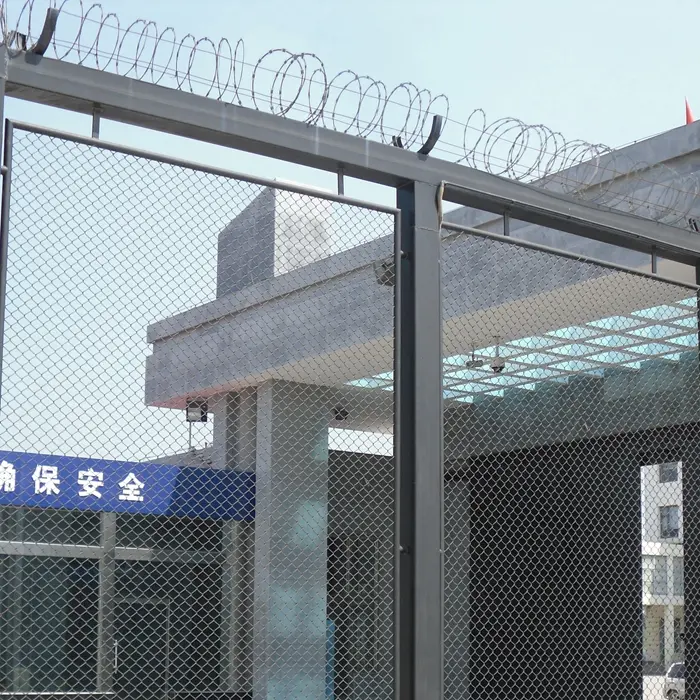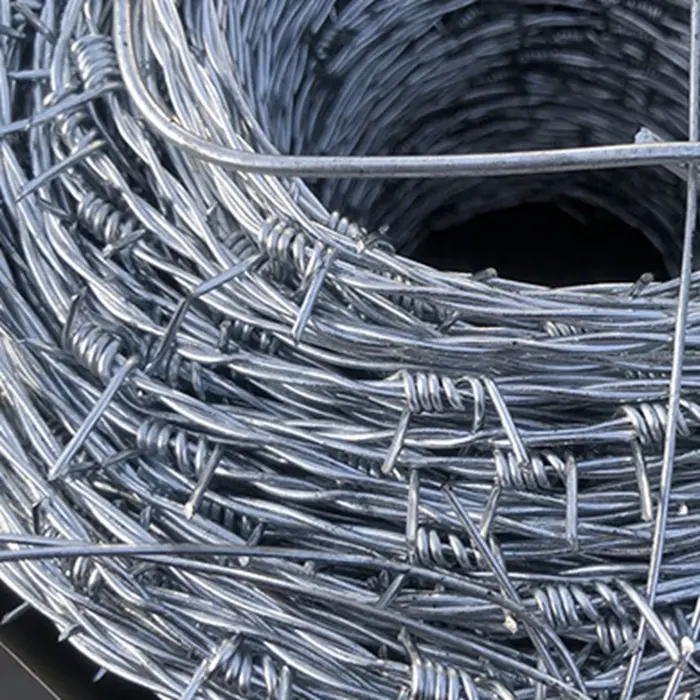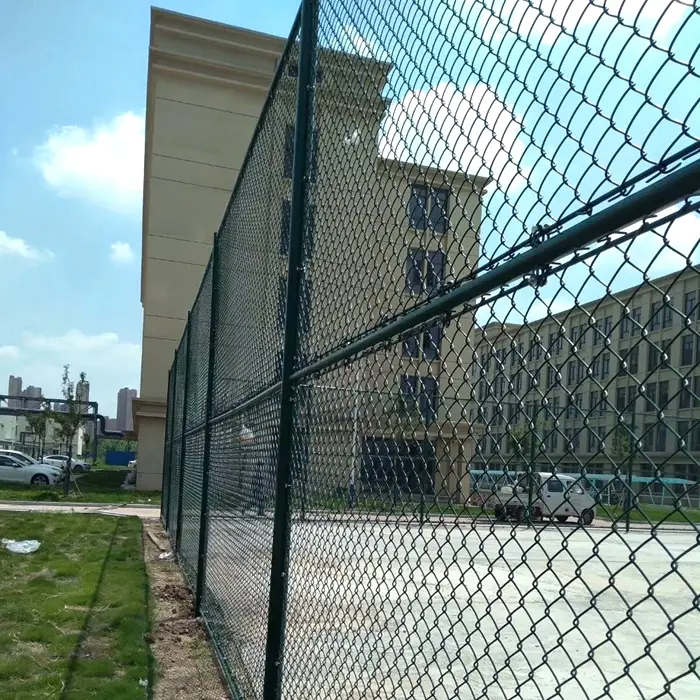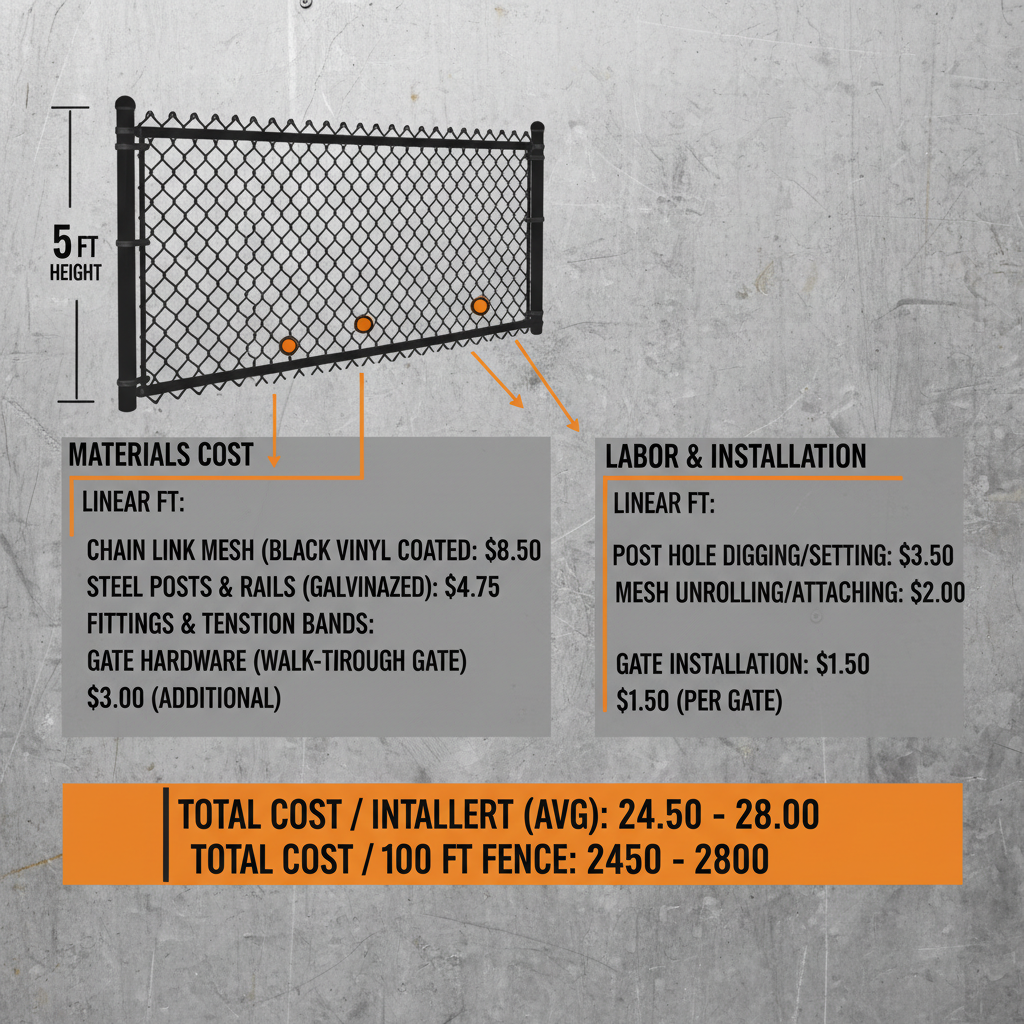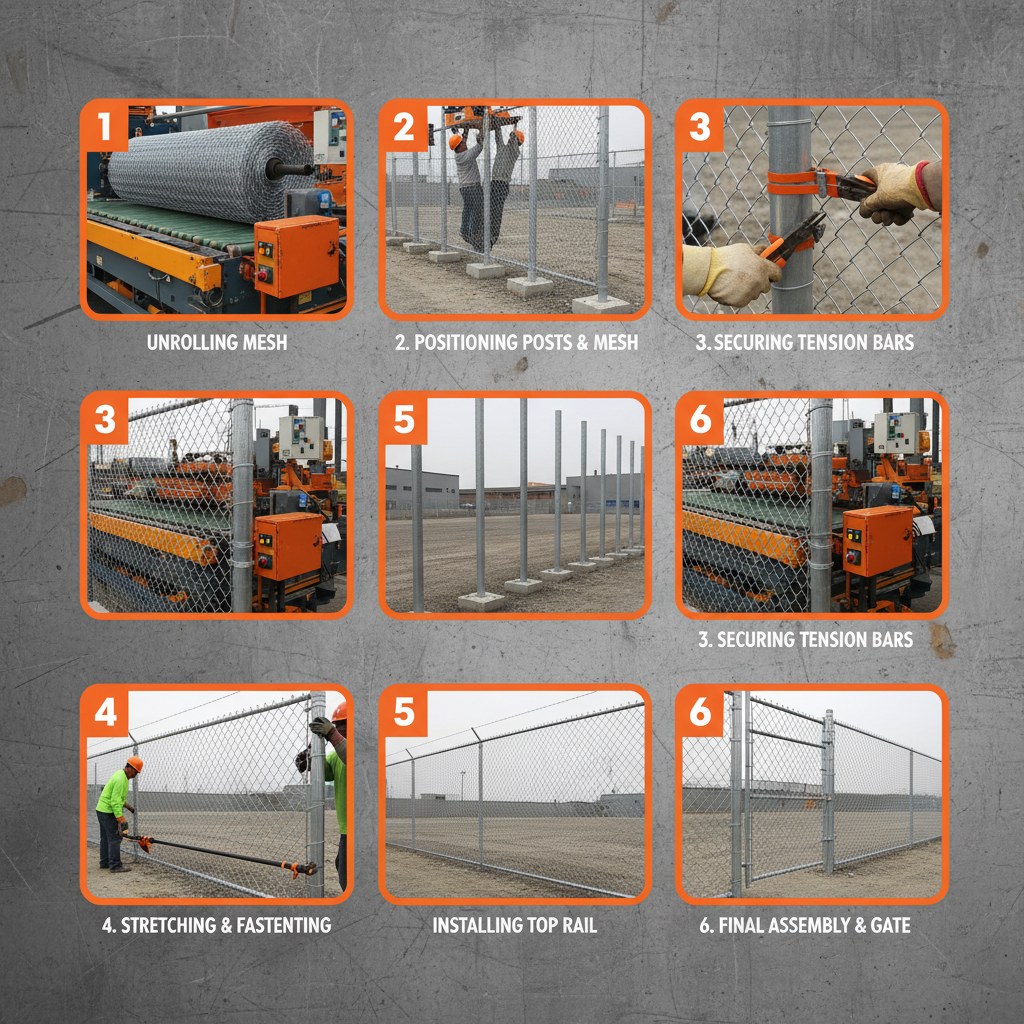

The fence has strong safety: The fence is made of high-strength steel wire, which has high compressive, bending and tensile strength and can effectively protect the safety of people and property within the fence.
The fence has good durability: the fence surface has been treated with special anti-corrosion spraying, which has good corrosion resistance and weather resistance, long service life and is very durable.
Highways are the circulatory system of modern commerce and travel, designed to move vehicles at high speeds across vast distances. However, the most treacherous points on any highway are not the open stretches of road, but the transitions—specifically where the road leaves solid ground and crosses over water, valleys, or other roadways. At these critical junctions, the bridge guardrail serves as the thin line between a recoverable traffic incident and a catastrophic fall.
Safety engineering has evolved significantly over the last century, moving from simple timber barriers to highly engineered steel and concrete systems. Today, barrier bridge guardrails are multi-functional safety devices designed to absorb energy, redirect vehicles, and protect the structural integrity of the bridge itself.
The Lifesaving Physics of a Bridge Guardrail
The primary objective of a bridge guardrail is containment. Unlike a standard roadside guardrail, which might have some "give" to cushion an impact, a guardrail on a bridge must be significantly more rigid. There is no "run-off-road" area on a bridge; a breach of the barrier almost certainly results in a vertical drop, which is often fatal.
Energy Dissipation and Redirection
When a vehicle strikes a guardrail at a high angle, the system is designed to perform three critical tasks:
Deceleration: The material (whether steel or concrete) must absorb a portion of the vehicle's kinetic energy to reduce the force of impact on the occupants.
Redirection: The guardrail must guide the vehicle back toward the travel lane at a shallow angle, preventing it from rebounding into the center of traffic or flipping over the barrier.
Structural Resistance: The barrier must stay anchored. If the guardrail shears off the bridge deck, it fails its primary mission.
Structural Requirements for a Guard Rail on Bridges
Installing a guard rail on bridges presents unique engineering challenges that differ from terrestrial installations. On a standard highway, guardrail posts are driven deep into the soil, which provides a natural cushion and anchor. On a bridge, however, the barrier must be bolted or cast directly into the reinforced concrete bridge deck.
The Challenge of Rigidity
A guard rail on bridges must be incredibly stiff. Because there is no soil to absorb the movement of the posts, the connection points—known as the bridge deck brackets—must be designed to withstand immense shearing forces. If the barrier is too flexible, a heavy vehicle could push the rail far enough over the edge that the vehicle’s center of gravity shifts, leading to a rollover.
Furthermore, these rails must account for environmental factors:
Thermal Expansion: Bridges expand and contract with the weather. The railing system must have expansion joints that allow for this movement without compromising the strength of the barrier.
Corrosion Resistance: Because bridges are exposed to wind, moisture, and (in colder climates) road salt, the steel components are typically hot-dip galvanized or made of weathering steel to prevent structural weakening over time.
Innovations in Modern Bridge Guardrail Design
As vehicles have become larger and heavier—particularly with the rise of electric vehicles (EVs) and heavy freight trucks—the standards for bridge guardrail design have undergone rigorous updates. In the United States, for example, the Manual for Assessing Safety Hardware (MASH) sets the "Test Levels" (TL) for these designs.
Key Elements of Contemporary Design
Modern bridge guardrail design focuses on a "Total System" approach:
Height Calibration: The height of the rail is calculated to prevent high-center-of-gravity vehicles (like SUVs and Semi-trucks) from vaulting over.
Smooth Face Surfaces: Contemporary designs avoid "snag points." If a vehicle slides along the rail, there should be no protruding bolts or posts that could catch a wheel and cause the vehicle to spin or flip.
Transition Zones: The most dangerous part of a bridge is where the flexible roadside guardrail meets the rigid bridge rail. Engineers design specialized "transition sections" that gradually increase in stiffness to ensure the vehicle doesn't strike the blunt end of the bridge wall.
The Aesthetic and Protective Role of Bridge Parapet Railing
In urban environments or scenic bypasses, the safety barrier often takes the form of a bridge parapet railing. A parapet is essentially a solid wall (usually concrete) that acts as the primary barrier, often topped with metal rails for added height or pedestrian protection.
Balancing Form and Function
The bridge parapet railing serves several roles beyond just stopping cars:
Pedestrian Safety: In many cases, bridges must accommodate cyclists and pedestrians. The parapet provides a solid "splash guard" from road spray and a physical height barrier (often 42 to 54 inches) to prevent pedestrians from accidentally falling over the edge.
Acoustic Insulation: Solid concrete parapets can act as sound barriers, reducing the noise pollution of high-speed traffic for the communities living beneath or near the bridge.
Visibility: Modern railings are designed with "see-through" capabilities where possible, allowing drivers to maintain a line of sight with the surrounding landscape, which reduces "tunnel vision" and driver fatigue.
Maintenance and Post-Accident Integrity Of Bridge Guardrail
A bridge guardrail is a "single-use" safety device. Once it has been involved in a significant collision, its structural integrity is compromised. One of the biggest challenges for highway departments is the inspection and repair of these systems.
Routine Inspections: Inspectors look for "hairline fractures" in the concrete parapets and rust at the base of steel posts. Even minor corrosion at the anchor bolts can lead to a total failure during an impact.
Retrofitting: Many older bridges were built to lower safety standards. Modern engineering projects often involve retrofitting these old structures with new, high-tension bridge guardrail systems to bring them up to current MASH TL-4 or TL-5 ratings.
Bridge Guardrail: The Silent Guardian of the Highway
The engineering that goes into a bridge guardrail is often invisible to the average driver. We pass these barriers every day without a second thought, yet they are the result of decades of crash testing, material science, and hydraulic engineering.
From the rigid strength of a guard rail on bridges to the sophisticated physics involved in bridge guardrail design, every component is tuned to save lives. Whether it is a sleek bridge parapet railing on an urban overpass or a heavy-duty steel rail on a mountain pass, these structures remain the most critical safety feature of any bridge. In the split second when a driver loses control, the guardrail stands as the final, unyielding protector against the abyss.