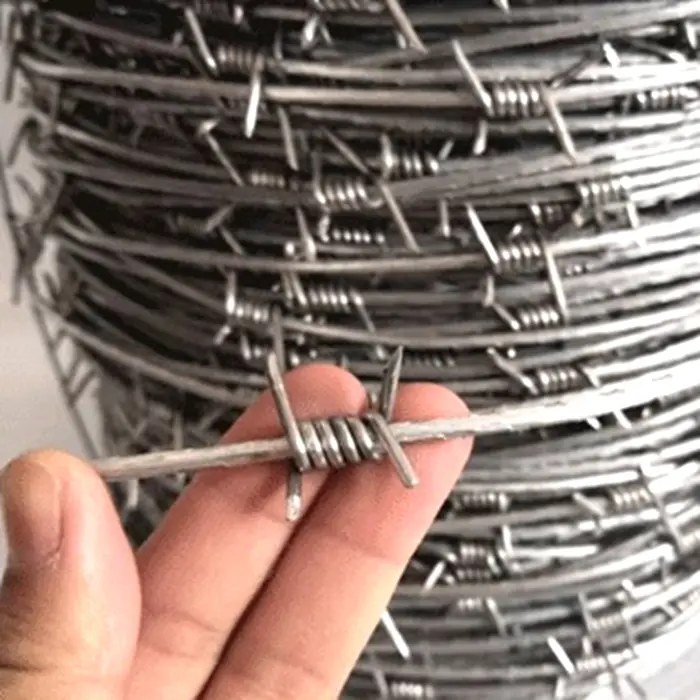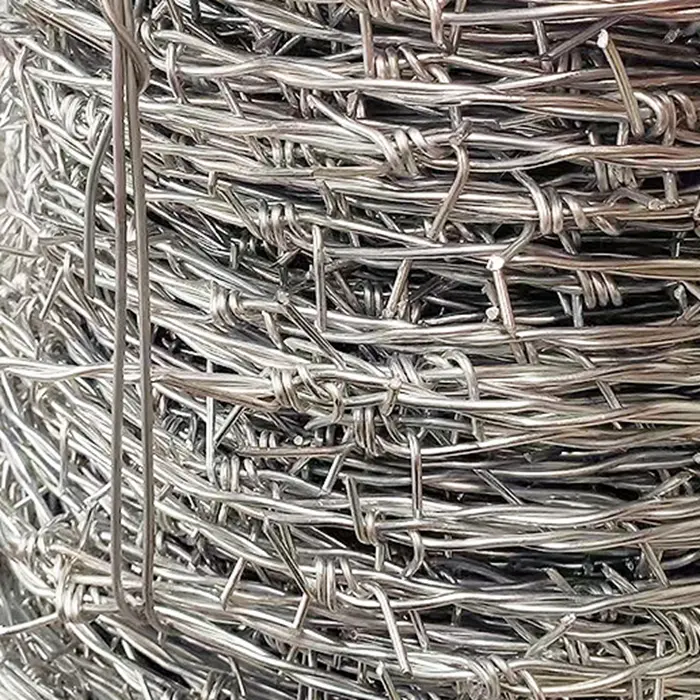

Razor barbed wire fence is a high-security perimeter barrier, distinct from traditional metal barbed wire by its sharp blades stamped from a sheet of steel. This design makes it significantly more difficult to breach and a highly effective deterrent against intruders. Its common spiral configuration, known as Concertina Coil, allows for compact transportation and relatively easy, rapid deployment.
Production Process: From Steel Coil to Razor Barbed Wire Fence
The manufacturing of spiral razor barbed wire involves several critical, sequential steps to transform raw materials into the finished, high-security product.
1. Material Selection and Preparation
The process begins with selecting high-quality materials to guarantee the fence’s durability and strength.
Core Wire: A high tensile barbed wire (or core wire) is essential. This is typically a heavily galvanized steel wire with a minimum tensile strength, often in the range of 1,200 to 1,600 MPa. This high strength ensures the finished coil resists cutting or stretching during intrusion attempts.
Razor Blade Material: The blade material is usually stainless steel or heavily galvanized steel sheet, providing excellent corrosion resistance and maintaining the blade’s sharpness over decades of outdoor exposure.
2. Stamping the Razor Blades
The unique deterrent feature of the razor wire is the blade. This step requires specialized machinery:
Punching: Large presses equipped with precision dies stamp the flat steel sheet into the distinctive razor profile. The blades are spaced at predetermined intervals, depending on the desired razor profile (e.g., BTO-22, CBT-65).
Blade Attachment: The punched razor tape is then mechanically crimped around the high tensile core wire. This crimping process must be strong enough to prevent the blade from slipping or rotating along the core wire, ensuring the razor tape remains securely fixed.
3. Forming the Spiral (Concertina) Coil
The spiral configuration is what makes the razor wire easy to transport and quick to deploy.
Winding: The assembled razor tape and core wire are fed into a coiling machine. This machine precisely winds the wire into a large spiral shape.
Clipping (Connecting): The next crucial step in creating the concertina effect is clipping. Heavy-duty metal clips (usually galvanized steel or stainless steel) are strategically used to join adjacent loops of the spiral at several points (typically 3, 5, or 7 clips per loop). These clips force the coil to expand into a tight, cylindrical barrier when deployed, maximizing the barrier density and difficulty of penetration. The number and quality of these clips are vital for the structure of the barbed wire security fence.
4. Surface Treatment and Packaging
Since the core wire is pre-galvanized, the final product boasts excellent rust resistance. However, a final inspection ensures all welds and clips are secure. The finished coils are then compressed into compact bundles, secured with metal bands, and packaged for shipping, ready for efficient deployment and installing razor wire at the site.
Installation Process: Installing Razor Wire for Maximum Security
Effective security depends not just on the product quality, but on proper high tensile barbed wire installation. Razor wire is typically installed on top of existing walls, fences, or mounted directly on the ground using support posts.
1. Preparation and Safety Protocol
Due to the extreme sharpness of the blades, safety is paramount when installing razor wire.
Protective Gear: Installers must wear heavy-duty leather gloves, long sleeves, safety glasses, and other protective equipment.
Outrigger Brackets: The most common method involves mounting angled or vertical brackets onto the existing perimeter structure (e.g., chain link fence or wall). These brackets ensure the razor barbed wire fence extends outward, preventing climbing and deterring close approach.
2. High Tensile Barbed Wire Installation Procedure
The Concertina Coil design facilitates deployment:
Unpacking: The compressed coil is carefully removed from its packaging, making sure to maintain control over the clips that hold it together.
Stretching: The coil is gently stretched along the line of the fence or wall. The installer must ensure even stretching to achieve the specified number of loops per meter (or foot), as too much stretching reduces density, while too little wastes material. The number of clips determines how much the coil can be safely stretched.
Securing: The stretched coil is firmly attached to the outrigger brackets using heavy-gauge tie wire or specialized mounting hardware. The wire should be taut to maintain the barrier's integrity.
3. Integration with Metal Barbed Wire
For enhanced security, the razor wire barrier is often combined with traditional metal barbed wire:
Layering: Traditional barbed wire is often installed on the lower sections of the fence or wall, with the sharp razor wire coil placed strategically at the top. This combination creates a multi-layered barrier, where the razor wire acts as the final, most severe deterrent.
Tensioning: When installing straight-line razor wire (not concertina), high-tension techniques similar to those used for standard high tensile barbed wire installation are employed to ensure the line does not sag, maintaining maximum height and effectiveness.
A Robust Barbed Wire Security Fence
The successful production and meticulous installation process result in a highly effective barbed wire security fence. The use of high tensile barbed wire as the core ensures structural strength, while the sharp blades of the razor tape provide a formidable physical and psychological deterrent. Properly installing razor wire by securing it to robust outriggers ensures it maintains its shape and density, offering unparalleled perimeter protection for military installations, prisons, high-risk industrial sites, and private properties requiring maximum security.