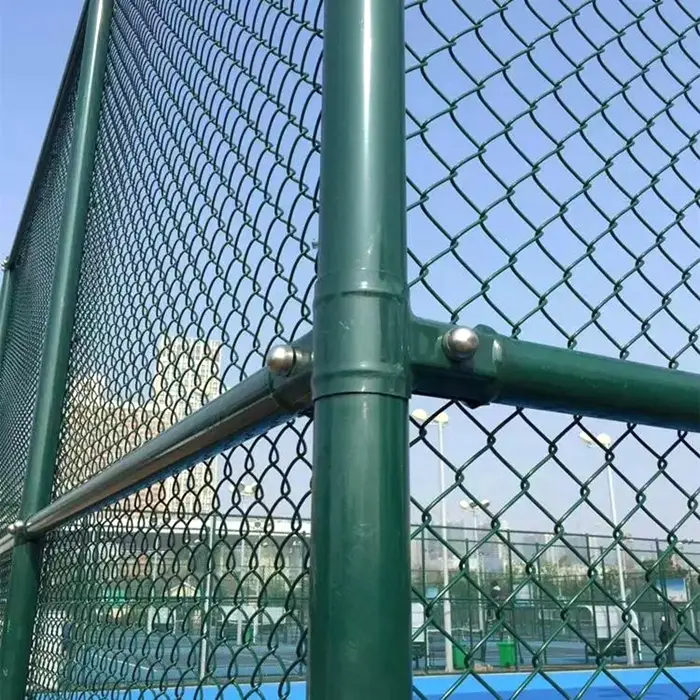

I wonder how much you know about the chain-link fence? Chain link fence is a common fence material, also known as "hedge net", which is mainly made of iron wire or steel wire. It has the characteristics of small mesh, thin wire diameter, and beautiful appearance. It can beautify the environment, prevent theft, and prevent the invasion of small animals.
Chain link fence is widely used, most commonly used as fences and isolation facilities in gardens, parks, communities, factories, schools and other places.
A football field, whether used for professional games, high school sports, or community recreation, requires robust perimeter security and crowd control. The choice of fencing is critical, balancing visibility, durability, and cost-effectiveness. The chain link fence for football fields is the dominant solution, offering a perfect blend of high strength, longevity, and clear sightlines for spectators. Selecting the right system involves understanding the key specifications related to height, gauge, coating, and components.
Choosing the Right Height: The High Chain Link Fence Standard
For athletic facilities, the height of the fence is determined by two main factors: crowd management and ball containment. A standard four-foot fence is often insufficient to meet these demands, making the high chain link fence the preferred option for football fields.
Containment: The primary function of a high fence behind the end zones and along the sidelines is to keep stray footballs—especially punts and field goals—from leaving the facility. Heights typically range from 8 feet (approximately 2.4 meters) to 12 feet (approximately 3.6 meters). For fields situated near busy roads or public areas, the maximum height is often used to ensure public safety from projectiles.
Crowd Control and Security: A higher fence acts as a more effective deterrent against unauthorized entry and provides a clear separation between spectators and the field of play. This is especially important for events where crowd behavior needs tight management.
Backstops: While not strictly a perimeter fence, areas directly behind goals or end zones, where containment is paramount, may even utilize netting systems or fences extending to 15 feet or 20 feet in localized sections to prevent continuous interruption of play and loss of equipment.
The decision on specific height must comply with local zoning regulations and the requirements of the governing sports body (e.g., NFHS, NCAA).
Strength and Longevity: Specifying a Heavy Duty Chain Link Fence
A fence surrounding a sports complex is subject to intense use, weather exposure, and occasional impact. Therefore, a standard residential fence gauge is inadequate. A heavy duty chain link fence is a non-negotiable requirement for a football field perimeter.
Wire Gauge (Gage): The gauge refers to the thickness of the wire. A smaller gauge number indicates a thicker, stronger wire.
Standard Commercial: For basic security, an 11-gauge wire is often considered.
Heavy Duty Standard: For football fields and high-impact areas, a 9-gauge wire is the industry standard. This thicker wire resists bending, cutting, and holds up better against impacts from balls, maintenance equipment, or accidental contact.
Extreme Heavy Duty: In rare cases, such as high-security facilities or areas prone to vandalism, 6-gauge wire may be specified, but this significantly increases material cost.
Mesh Size: This is the distance between parallel wires. For sports applications, a standard 2-inch (50 mm) diamond mesh is most common, providing a good balance of security and visibility. Smaller meshes (e.g., 1.75 inches) offer slightly more containment and security but are rarely needed for ball containment alone.
Framework (Posts and Rails): The fence fabric is only as strong as its framework. Heavy-duty specifications for posts and rails typically involve using schedule 40 steel pipe for corner and gate posts, and heavier wall tubing for line posts and top rails. All steel components should be hot-dip galvanized for maximum corrosion protection.
Coating and Customization: Evaluating Chain Link Fence Options
Modern chain link fencing provides multiple options beyond simple galvanized steel, allowing facility managers to tailor the look and lifespan of the fence. Considering the chain link fence options available can enhance aesthetics and minimize maintenance.
Galvanized Steel: This is the most cost-effective and common option. The steel is coated in zinc to prevent rust and corrosion. It offers excellent durability but maintains a traditional, industrial silver appearance.
Vinyl-Coated (Polymer-Coated): In this option, the galvanized steel is further coated with a thick layer of extruded polyvinyl chloride (PVC).
Benefits: PVC coating dramatically increases the fence's lifespan by providing a second layer of protection against rust. It also offers a significant aesthetic advantage, with common colors being black, green, or brown. Black vinyl-coated chain link fence is increasingly popular for football fields as it visually recedes, providing better contrast and less glare for spectators and television cameras.
Specification: Vinyl-coated fences are typically specified as "vinyl over 9-gauge wire," meaning the underlying metal is 9-gauge, providing the required heavy duty strength.
Slats: Fence slats (vertical plastic inserts) are a customization option primarily used for privacy or to reduce wind and dust. While they can be added to any commercial chain link fence, they are generally avoided directly adjacent to the field as they can obscure sightlines and are not necessary for ball containment.
The Commercial Chain Link Fence as a System
The chain link fence system for a football field falls under the commercial chain link fence category, meaning it is engineered for continuous, heavy-use applications and requires higher-grade components than residential systems.
Fittings and Hardware: All fittings (tension bands, brace bands, post caps) must be heavy-duty steel, galvanized or powder-coated, to match the longevity of the fabric and framework. The use of high-quality tension bars and tension wires (bottom wire) is crucial for keeping the fabric taut, especially on a high chain link fence.
Gates: Gates must be robust, often using double-swing access gates wide enough to accommodate maintenance vehicles, emergency access, and equipment transport (typically 12 to 24 feet wide). The gates' framework must match the heavy duty specifications of the perimeter fence to prevent sagging or twisting.
Installation: For a commercial chain link fence, the posts must be securely set in concrete footings deep enough to withstand frost heave and strong wind loads. Proper tensioning of the fabric is the key to a professional, long-lasting installation, preventing the "wavy" appearance associated with low-quality fencing.
The selection of a chain link fence for football fields is a structured process that prioritizes durability and safety. By specifying a heavy duty chain link fence—typically using 9-gauge, vinyl-coated wire on a schedule 40 steel framework—and opting for a high chain link fence design (8 to 12 feet), facility managers ensure optimal ball containment, effective crowd management, and a long-term investment. The array of chain link fence options, particularly color coating, allows the functional fence to integrate seamlessly with the athletic branding of the facility.