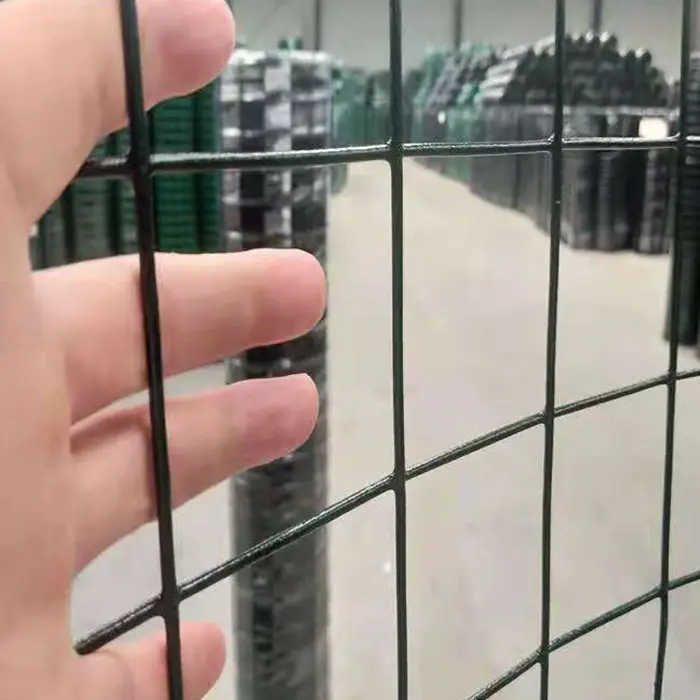

Advantages of 358 anti-climbing guardrail:
1. Anti-climbing, dense grid, fingers cannot be inserted;
2. Resistant to shearing, the scissors cannot be inserted into the middle of high-density wire;
3. Good perspective, convenient for inspection and lighting needs;
4. Multiple mesh pieces can be connected, which is suitable for protection projects with special height requirements.
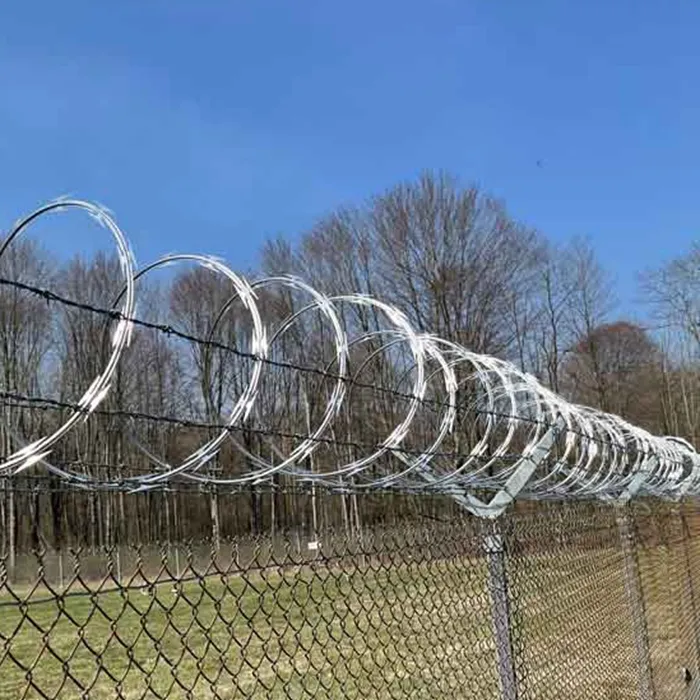
5. Can be used with razor wire netting.
In the world of high-stakes security, the perimeter is the first and last line of defense. For correctional facilities, the stakes are uniquely high: the fence must not only keep intruders out but, more importantly, keep inmates in. Among the various solutions available, the 358 fence has earned a global reputation as the "gold standard" for prison security.
The name "358" stems from its specific measurements: 3 inches by 0.5 inches by 8 gauge. Translated into the metric system, this represents a mesh aperture of approximately 76.2mm x 12.7mm using a 4mm wire diameter.
Defeating Intrusions with 358 Prison Mesh
The primary challenge in a correctional environment is preventing physical contact with the barrier that could lead to a breach. 358 prison mesh is engineered specifically to address the vulnerabilities of traditional chain-link or standard welded wire fences.
The Power of Small Apertures
The signature feature of 358 prison mesh is its incredibly tight spacing. The horizontal wires are placed so close together (12.7mm) that it is physically impossible for an intruder or inmate to insert their fingers or toes into the gaps.
Anti-Grip Surface: Because there are no handholds or footholds, the fence cannot be scaled without specialized climbing equipment.
Restricting Contraband: The narrow gaps make it extremely difficult for items to be passed through the fence, a critical factor in preventing the flow of weapons or drugs into a facility.
CCTV Compatibility: Despite its density, the mesh is remarkably transparent when viewed at an angle or through a camera lens. This allows security personnel to maintain clear lines of sight across the perimeter, ensuring that "blind spots" are eliminated.
Unmatched Deterrence: The 358 Anti Climb Fence
Climbing is the most instinctive method of attempting a perimeter breach. However, the 358 anti climb fence is designed to be a "psychological and physical dead end" for any would-be escapee.
Why It Is Virtually Unclimbable
Standard security fences often provide enough space for a person to gain a purchase. In contrast, the vertical wires of the 358 anti climb fence act as a sheer wall. Even the most determined individual cannot find the leverage necessary to pull their body weight upward.
Tool Resistance: The spacing is so tight that it prevents the insertion of standard bolt cutters or tin snips. Most manual cutting tools simply cannot get a "bite" on the wire because they cannot fit between the gaps.
Integration with Toppings: To further enhance its anti-climb properties, these fences are almost always topped with concertina razor wire, electric fencing, or motion-sensing spikes. The rigidity of the 358 panel provides a stable base for these aggressive toppings, creating a formidable vertical obstacle.
Stability Under Pressure: Unlike flexible netting, 358 mesh does not "give" or sag when leaned against, preventing an inmate from creating a "bridge" or using the mesh's own flexibility to gain height.
Engineering a 358 High Security Fence for Maximum Longevity
Prison environments are demanding, often requiring a service life of several decades under constant surveillance and potential physical abuse. A 358 high security fence is built to withstand both the elements and intentional damage.
Superior Material Science
The longevity of a 358 high security fence depends heavily on its coating and welding quality. Most prison-grade panels undergo a multi-stage protection process:
Galfan or Heavy Galvanization: The core steel wire is coated in a zinc-aluminum alloy that provides superior corrosion resistance compared to standard galvanizing.
Polymer Powder Coating: An electrostatic polyester coating is applied, providing an extra layer of protection against UV rays and chemical exposure.
Resistance Welding: Each intersection is fused using high-pressure resistance welding. This ensures that if one wire is cut, the surrounding mesh maintains its structural integrity and tension.
This "belt and braces" approach to manufacturing ensures that the fence remains a viable deterrent even in coastal or high-humidity environments where rust would typically compromise a security system within years.
The Structural Benefits of High Strength 358 Fence
When we talk about "high strength," we are referring to the fence’s ability to resist both blunt force trauma and sophisticated cutting attempts. A high strength 358 fence utilizes high-tensile steel wire that resists bending and shearing.
Breaking Strength and Rigidity
The sheer density of the wires (over 2,000 welds in a standard panel) creates a massive cumulative strength.
Ramming Resistance: While not a dedicated crash barrier, the high strength 358 fence can withstand significantly higher impact forces than standard fencing, preventing light vehicles or heavy equipment from easily flattening the barrier.
Vibration Sensor Optimization: Because the panels are so rigid, they are the ideal substrate for PIDS (Perimeter Intrusion Detection Systems). Microphonic cables or vibration sensors attached to a 358 panel produce fewer "false positives" from wind because the fence doesn't rattle or shake like chain-link does. However, when a deliberate cut or climb attempt occurs, the vibration is transmitted clearly to the sensor, allowing for rapid response.
358 Prison Mesh: The Ultimate Investment in Public Safety
The selection of a perimeter system for a correctional facility is a decision with zero margin for error. The 358 fence has proven itself in the most volatile environments across the globe. By combining the "unclimbable" nature of 358 prison mesh with the high-tech deterrence of a 358 anti climb fence, authorities can ensure a secure environment for both the public and the staff within.
Its evolution into the 358 high security fence of today—utilizing high strength 358 fence materials and advanced coatings—means that it is no longer just a fence, but a sophisticated, multi-layered security asset. For prisons, psychiatric hospitals, and military bases, there is simply no substitute for the density, strength, and reliability of 358 technology.