
Understanding green wire mesh fencing prices is critical for project managers and property owners who need to balance aesthetic integration with high-security perimeter protection. In the specialized field of metal wire products, the cost of green-coated fencing is not merely a commodity price but a reflection of the coating quality, wire gauge, and the specific security grade required for the installation.
Procurement challenges often arise when buyers confuse basic PVC-coated chain link with high-tensile welded mesh, leading to either overspending on unnecessary specs or under-investing in durability. The primary goal is to secure a solution that prevents corrosion and unauthorized entry while remaining cost-effective over a long-term operational lifecycle.
This analysis provides a comprehensive breakdown of the factors influencing the cost of green wire mesh, how to evaluate technical specifications against budget constraints, and a practical framework for selecting a manufacturer that ensures longevity in diverse environmental conditions.

Core Components of Green Fencing Costs

The price of green wire mesh fencing is primarily driven by the raw material weight and the complexity of the manufacturing process. The base cost begins with the selection of the core wire, typically hot-dip galvanized steel or stainless steel. High-tensile galvanized steel is the industry standard for security fencing due to its balance of strength and cost-efficiency, while stainless steel options significantly increase the price point but offer superior corrosion resistance in saline environments.
Beyond the wire, the aperture size (mesh opening) and the wire diameter play pivotal roles. A tighter mesh, such as that found in 358 anti-climb systems, requires more material per square meter and more precise welding, which elevates the cost compared to standard hexagonal or large-grid welded mesh. Consequently, the security level directly correlates with the material volume and labor intensity involved in production.
Impact of Coating Technology on Pricing
The "green" aspect of the fencing is achieved through various surface treatments, and the choice of coating is one of the most significant variables in green wire mesh fencing prices. PVC coating is the most common, providing a thick, protective plastic layer that blends with natural surroundings. The cost varies based on the thickness of the PVC layer and the quality of the resin used to prevent peeling and UV degradation.
For higher-end industrial applications, powder coating or E-coating (electrophoretic coating) may be used. While these processes can be more expensive than simple PVC dipping, they provide a more uniform finish and better adhesion to the metal substrate. Buyers must weigh the initial higher cost of these advanced coatings against the reduced need for maintenance and repainting over the fence's lifespan.
Application-Specific Configuration Costs
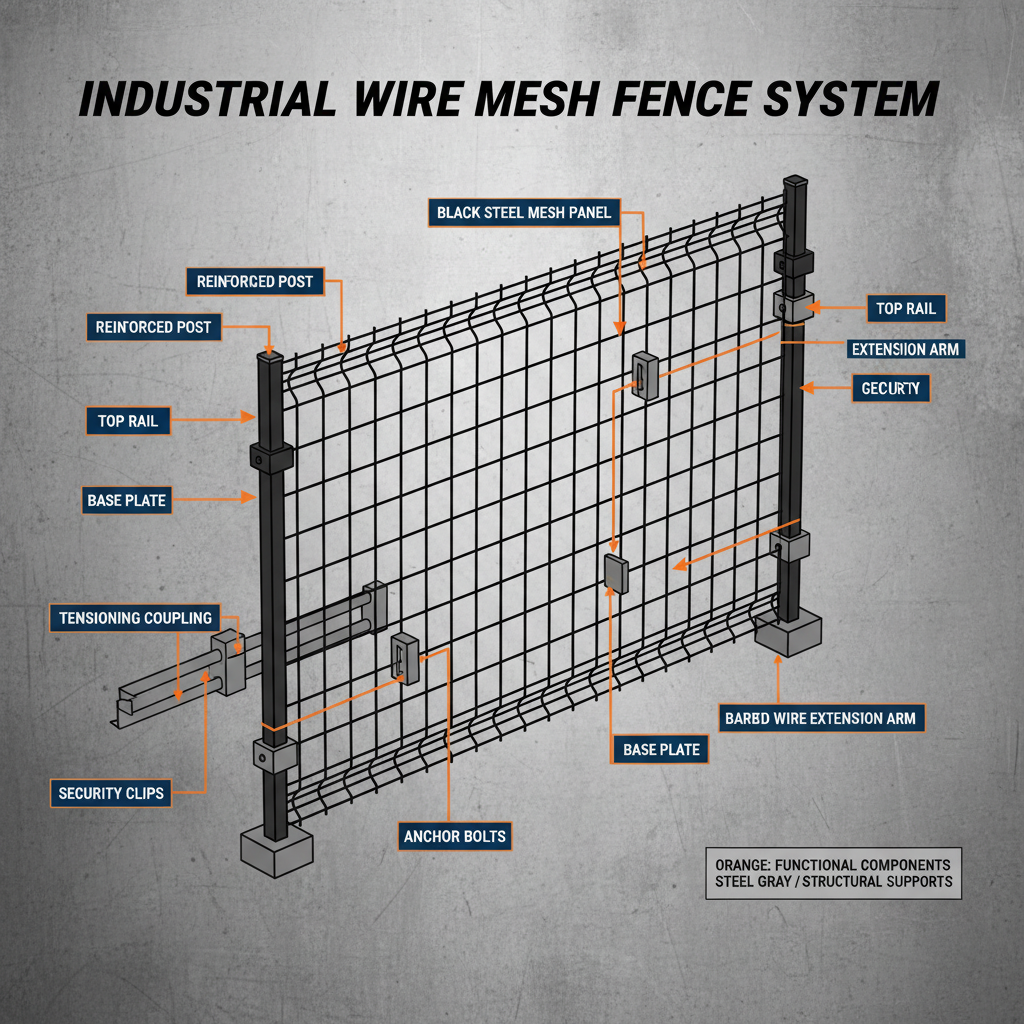
The final price is rarely just for the mesh; it includes the entire system configuration. For instance, adding a razor wire topper—such as the DJL series with various blade lengths from 10mm to 65mm—adds a specific layer of cost based on the blade thickness (typically 0.5mm to 0.6mm) and the core wire diameter. A project requiring both a green welded mesh base and a concertina razor wire top will have a significantly higher per-linear-meter cost than a simple boundary fence.
Furthermore, the choice of posts and installation hardware affects the budget. Heavy-duty galvanized posts for high-security zones cost more than light-duty supports for garden apartments. When requesting quotes, it is essential to specify whether the price is for the mesh only or for a complete kit including brackets, tensioners, and posts to avoid hidden costs during the implementation phase.
Relative Cost Drivers Analysis
To understand where the budget is allocated, we can analyze the relative influence of different factors on the total price. While raw steel is the foundation, the value-added processes like specialized coating and security enhancements often create the widest price gaps between different product tiers.
The chart above illustrates a conceptual impact index. Raw material cost remains the baseline, but the "Coating Quality" and "Security Grade" (such as anti-climb features) act as the primary multipliers. For a standard green fence, raw material dominates, but for a professional security installation, the technical specifications of the mesh and coating become the dominant cost drivers.
Evaluating Total Cost of Ownership (TCO)
Focusing solely on the initial purchase price is a common procurement error. The Total Cost of Ownership (TCO) includes the purchase price, installation costs, and the long-term maintenance required to keep the fence functional. A cheaper green wire mesh with low-quality PVC coating may peel within three years, leading to rust and the need for complete replacement.
In contrast, investing in a high-zinc coating (e.g., 90 gsm to 275 gsm) combined with a premium PVC finish ensures a longer service life. When calculating TCO, buyers should consider the "cost per year of service" rather than the "cost per meter." A system that lasts 15 years at a 20% premium over a 5-year system is significantly more economical in the long run.
Common Pricing Pitfalls in Procurement
One of the most frequent mistakes is ignoring the "zinc coating" specification. Many suppliers offer "green" fences that have minimal galvanization under the PVC. Once the PVC is scratched or weathered, the underlying steel rusts rapidly. Buyers should insist on knowing the zinc coating weight to ensure the fence has a secondary layer of protection.
Another pitfall is the failure to specify the tensile strength of the wire. Standard mild steel is easier to cut and bend than high-tensile steel (1400–1600 MPa). While high-tensile wire might be slightly more expensive, it allows for fewer posts over a longer span, which can actually reduce the overall project cost by lowering the amount of hardware and labor needed for installation.
Selection Framework for Budget Optimization
To optimize the budget, buyers should match the fence type to the specific risk level of the area. Not every perimeter requires the most expensive security grade. The following framework compares common green mesh options based on their cost-to-performance ratio.
| Fence Type | Cost Level | Security Grade | Best Use Case |
|---|---|---|---|
| PVC Chain Link | Low | Basic | Residential/Garden |
| Welded Mesh (Standard) | Medium | Moderate | Commercial Borders |
| 3D Welded Fence | Medium-High | Moderate | Parks/Industrial |
| 358 Anti-Climb | High | Extreme | Prisons/Gov Agency |
| PVC Razor Mesh | High | Extreme | High-Risk Borders |
| Hexagonal Mesh | Low-Medium | Basic | Agricultural/Cattle |
By utilizing this framework, procurement officers can allocate funds where they are most needed—investing in high-security 358 mesh for critical access points and using standard PVC-coated welded mesh for less sensitive boundary lines.
Frequently Asked Questions
The primary factors are the raw material cost (steel grade and weight), the coating method (PVC, powder, or E-coating), the mesh aperture size, and the security specifications such as anti-climb features or razor wire additions.
Standard forest green is typically the most cost-effective as it is produced in high volumes. Custom colors or specific Pantone matches may require smaller production runs, which can slightly increase the price.
Galvanized steel is the standard for most projects due to its affordability. Stainless steel is significantly more expensive but is recommended for coastal areas where salt spray would cause galvanized steel to corrode faster.
PVC coating is generally more affordable and provides a thicker layer. Powder coating is often more expensive but offers a more precise finish and better adhesion, which is preferable for high-visibility architectural projects.
Yes, by using a "hybrid" approach. Install high-grade anti-climb mesh at critical vulnerability points and use standard welded green mesh for the remainder of the perimeter.
Check if the quote includes the zinc coating weight (gsm), the wire tensile strength (MPa), the PVC thickness, and whether installation hardware and posts are included in the per-meter price.
Conclusion
Optimizing green wire mesh fencing prices requires a strategic shift from focusing on the lowest initial quote to analyzing the total value delivered. By matching the material grade, coating technology, and security level to the actual risk of the environment, buyers can avoid the costly mistakes of over-specification or premature system failure. The key to a successful installation lies in the balance between the protective capabilities of the metal and the durability of the green finish.
For professional procurement and detailed technical specifications regarding high-security green fencing solutions, please review the available product range at www.djfencemesh.com to ensure your project meets both budget and security requirements.